
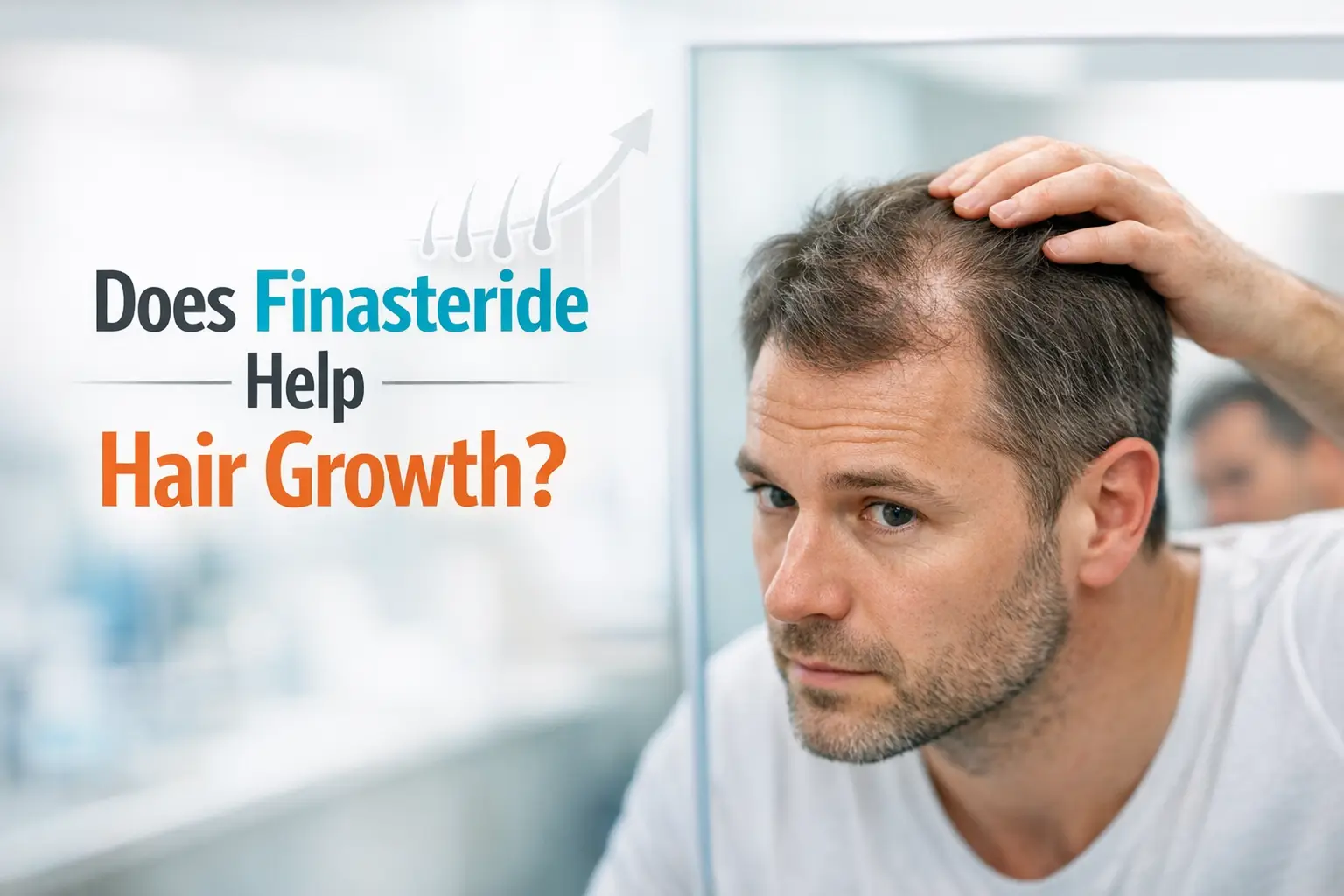
Finasteride helps hair growth by reducing the hormone responsible for male pattern baldness. It slows down hair loss and can promote regrowth in many men.
Before the late 1990s, men struggling with hair loss had very limited options that truly worked. That landscape shifted when Finasteride was introduced and approved by the U.S. Food and Drug Administration (FDA) in 1997, marketed under the name Propecia.
This daily oral medication provides men with a chance to slow down, halt, or in some cases even reverse hair loss. If you’re noticing thinning hair, Finasteride can be used by itself or alongside other hair restoration methods to potentially boost the results.
How Does Finasteride Promote Hair Growth?
Finasteride promotes hair growth by blocking the conversion of testosterone to DHT, a hormone that causes hair follicle shrinkage.
Finasteride works by inhibiting the enzyme 5-alpha reductase, which converts testosterone into dihydrotestosterone (DHT). DHT is the key hormone behind male pattern baldness.
By lowering DHT levels, Finasteride helps prevent hair follicles from shrinking—a process known as miniaturization—and supports the maintenance of healthier hair growth.
Clinical trials back this up: after two years of regular use, 83% of men taking Finasteride showed no further hair loss, compared to only 28% in the placebo group.
Lowering DHT is essential to preserving hair follicles and preventing further hair loss.
Is Finasteride Worth It?
Finasteride is worth trying for many men as it can significantly slow hair loss and sometimes restore hair thickness.
Think of Finasteride as a shield for your hair.
While it might not bring back every lost hair, many users notice a significant slowdown or complete stop in hair loss. For those in early stages of thinning, it can even help restore some thickness.
One two-year study found that men on Finasteride had a notable increase in hair count compared to where they started.
Consistent use is key to maintaining its benefits over time.
When Will You See Results From Finasteride?
Most men see initial results from Finasteride within 3 to 4 months, with clearer improvements by one year.
Patience matters. Most men start to see less shedding and thicker hair around the 3 to 4-month mark, with clearer improvements becoming visible by about a year.
It’s quite common to experience some temporary shedding in the first few weeks—this happens as older hairs fall out to make way for new, stronger ones.
Early shedding is a normal sign that the treatment is working to replace weaker hairs.
Ways to Enhance the Results of Finasteride
Combining Finasteride with other treatments can improve hair growth results.
Finasteride alone is effective, but combining it with other proven treatments can improve your chances of better, longer-lasting results.
Combine Finasteride and Minoxidil
Using Finasteride with Minoxidil often leads to better hair growth than using either treatment alone.
While Finasteride tackles DHT at the hormonal level, Minoxidil works directly on the hair follicles. It extends the growth (anagen) phase and boosts blood flow to the scalp.
Because they work differently, using both together often leads to better outcomes than either alone.
Minoxidil stimulates follicles while Finasteride protects them from hormone damage.
| Feature | Finasteride | Minoxidil |
|---|---|---|
| Mechanism of Action | Blocks DHT formation by inhibiting 5-alpha reductase | Stimulates follicles and prolongs the anagen phase |
| Form | Oral tablet (1 mg daily) | Topical solution or foam (2–5% concentration) |
| Best Candidates | Men with androgenetic alopecia (DHT-related hair loss) | Men and women with thinning or diffuse hair loss |
| Expected Results | Visible reduction in hair loss after 3–4 months; peak results at 12 months | Improved hair density within 4–6 months of consistent use |
Review Your Hair Care Products
Choosing gentle, supportive hair care products can complement Finasteride’s effects.
Choose shampoos and conditioners that support hair health—ideally those free from harsh sulfates and parabens.
Some formulas contain ketoconazole or saw palmetto, which may help reduce scalp DHT, complementing Finasteride’s effects.
Biotin-enriched conditioners can also strengthen hair strands and improve texture.
Healthy scalp products enhance the environment for hair growth.
Give Your Scalp Extra Care
Regular scalp massage can stimulate circulation and promote thicker hair growth.
Massaging your scalp regularly can stimulate circulation and encourage hair growth.
Research shows that just four minutes of daily scalp massage over 24 weeks can increase hair thickness.
Use gentle, circular motions without pressing too hard.
Maintain a Healthy Lifestyle
A balanced diet and stress management support hair health alongside Finasteride treatment.
Your diet, hydration, and stress levels all play a role in hair health.
Eating a balanced diet rich in zinc, iron, protein, and B vitamins supports hair growth.
Avoid smoking and find ways to manage stress—relaxation techniques or mindfulness can help prevent telogen effluvium, a form of temporary hair shedding.
Good overall health contributes to stronger, healthier hair.
Final Thoughts on Using Finasteride
Finasteride is a clinically proven treatment that can help maintain and regrow hair when used consistently.
Finasteride is among the most effective, clinically supported treatments for male pattern hair loss.
That said, it’s not a miracle cure—consistent use and regular medical check-ins are key.
For optimal results, consider pairing Finasteride with treatments like Minoxidil, maintain a healthy lifestyle, and consult your healthcare provider regularly.
With proper guidance, Finasteride can help you keep the hair you have and regain confidence.
Hair Transplant Turkey – Combining Medical Expertise & Natural Results
If you’re exploring advanced hair restoration, Quartz Hair Clinic in Istanbul offers expert DHI and FUE hair transplants. These procedures are performed under skilled medical supervision, aiming for natural and lasting results.
Quick Answers
- Finasteride reduces DHT, the hormone causing hair loss, to promote hair growth.
- Results typically begin after 3 to 4 months of daily use, with full effects by one year.
- Combining Finasteride with Minoxidil often improves hair growth outcomes.
- Healthy scalp care and lifestyle support enhance Finasteride’s effectiveness.
- Consistent use is necessary; stopping treatment usually reverses benefits.
Frequently Asked Questions
Does Finasteride Help Hair Growth for Everyone?
Finasteride is effective for most men with male pattern baldness, especially in early to moderate stages. However, individual responses can vary, and it may not work for everyone.
Are the Effects of Finasteride Permanent?
The benefits of Finasteride last only as long as you continue the medication. Stopping treatment usually leads to hair loss resuming within months.
Can Women Use Finasteride for Hair Loss?
Finasteride is generally not recommended for women, especially those who are pregnant or may become pregnant, due to potential risks to a male fetus.
What Are the Common Side Effects of Finasteride?
Some men may experience side effects such as decreased libido, erectile dysfunction, or mood changes. These effects are uncommon and often resolve after stopping the medication.
How Should Finasteride Be Taken for Best Results?
Taking Finasteride daily as prescribed, usually 1 mg per day, is important. Consistency over months is necessary to see and maintain results.
| Aspect | Finasteride | Minoxidil |
|---|---|---|
| Mechanism | Blocks DHT production | Stimulates hair follicles directly |
| Application | Oral tablet | Topical solution or foam |
| Onset of Results | 3-6 months | 2-4 months |
| Common Side Effects | Sexual dysfunction, mood changes | Scalp irritation, itching |
| Use | Primarily men | Men and women |
References
- Kaufman KD, et al. Finasteride in the treatment of men with androgenetic alopecia. J Am Acad Dermatol. 1998;39(4 Pt 1):578-89. PMID: 9760307
- Olsen EA, et al. A randomized clinical trial of 5% topical minoxidil versus 2% topical minoxidil and placebo in the treatment of androgenetic alopecia in men. J Am Acad Dermatol. 2002;47(3):377-85. DOI: 10.1067/mjd.2002.123103