
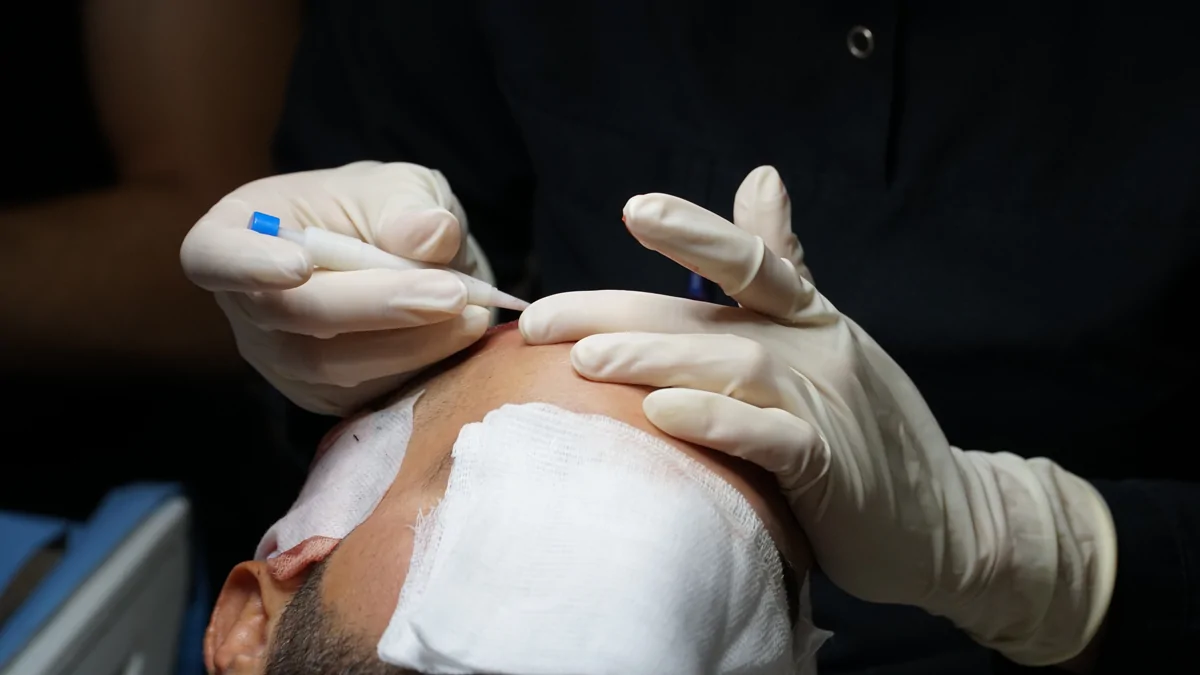
In Turkey, DHI hair transplant is commonly chosen by international patients who want natural-looking results with careful planning and medical follow-up. The best outcome depends not only on the technique itself, but also on donor area evaluation, graft handling, hairline design, and realistic density planning.
At Quartz Hair Clinic in Istanbul, our medical team plans each DHI procedure according to the patient’s hair loss pattern, donor capacity, hair characteristics, and long-term restoration goals. DHI can be an effective option for suitable patients, but it is not the right method for every case.
What Is DHI Hair Transplant?
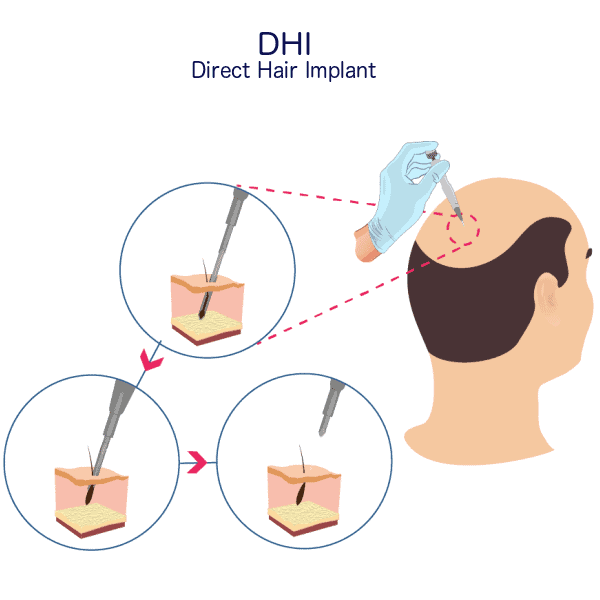
DHI stands for Direct Hair Implantation. In this technique, individual grafts are taken from the donor area and placed into the recipient area with a Choi-style implanter pen. This allows the medical team to control the angle, direction, and depth of graft placement during implantation.
The main difference between DHI and some other techniques is that recipient channels are not opened separately before implantation. Instead, the implanter pen is used to place the grafts directly into the scalp. This can be helpful in selected areas where precision is important, such as the frontal hairline, temples, or areas requiring careful blending with existing hair.
DHI hair transplant may be suitable for men and women, especially when the goal is natural density in a defined area rather than covering a very large bald region in a single session.
How Does DHI Hair Transplant Work?
A DHI procedure begins with consultation and medical planning. The donor area, recipient area, hair loss pattern, scalp condition, and patient expectations are evaluated before deciding whether DHI is suitable.
The procedure usually includes several steps:
- Consultation and planning: The donor area, hairline design, and graft needs are assessed.
- Donor preparation: The donor area is prepared according to the planned extraction approach.
- Local anesthesia: The procedure is performed under local anesthesia to support patient comfort.
- Graft extraction: Hair follicles are carefully harvested from the donor area.
- Implanter pen loading: Grafts are placed into the implanter device with attention to graft protection.
- Direct implantation: Follicles are implanted into the recipient area at planned angles and directions.
- Aftercare guidance: The patient receives washing, medication, and follow-up instructions.
The success of DHI depends on careful graft handling and proper placement. The technique can support natural-looking results, but it requires experience, planning, and realistic expectations.
DHI vs FUE Hair Transplant
DHI and FUE are both modern hair transplant methods. In FUE, grafts are extracted individually from the donor area, and recipient channels are usually opened before graft placement. In DHI, grafts are implanted directly using an implanter pen after extraction.
Neither technique is automatically better for every patient. FUE hair transplant may be more practical for larger graft sessions, while DHI may be preferred for controlled implantation in selected areas. The right choice depends on donor capacity, recipient area size, hair characteristics, and the desired density.
| Criteria | DHI Hair Transplant | FUE Hair Transplant |
|---|---|---|
| Implantation Method | Direct implantation with an implanter pen | Channels are opened before graft placement |
| Best Use | Hairline, temples, selected density areas | Broader coverage and larger sessions |
| Shaving | May allow partial shaving in selected cases | Often requires wider shaving |
| Planning Focus | Angle, direction, and controlled placement | Efficient graft distribution over larger areas |
| Suitability | Depends on area size and graft needs | Depends on donor strength and coverage goals |
Advantages and Limitations of DHI Hair Transplant
DHI can offer important advantages in selected patients, especially when precision and natural placement are priorities. However, it also has limitations, and these should be discussed clearly during consultation.
Potential Advantages
The main potential benefit of DHI is controlled implantation. This can help the medical team place grafts at suitable angles and directions, especially around the frontal hairline and visible transition zones.
- May support precise graft placement
- Can be useful for hairline and temple work
- May allow partial shaving in selected patients
- Can help blend transplanted hair with existing hair
- May reduce the time grafts spend outside the scalp when performed efficiently
Possible Limitations
DHI is not always the most suitable choice for very large bald areas or cases requiring a very high graft count in one session. It can also take longer and requires careful handling of grafts during loading and implantation.
- May not be ideal for every large-session case
- Requires careful technical execution
- Can be more time-intensive than some approaches
- May require staged planning for extensive hair loss
- Final results still depend on donor quality and graft survival
Can DHI Be Done Without Shaving?
DHI may be performed with partial shaving in selected patients, depending on hair length, donor area access, graft number, and recipient area needs. This is one reason why some patients consider DHI when they want a more discreet procedure.
However, unshaven or partially shaven planning is not suitable for every patient. If a large number of grafts is required, shaving may still be recommended to protect graft quality, improve visibility, and allow safer extraction and implantation.
Patients should discuss this before surgery instead of assuming that DHI always means a fully unshaven hair transplant.
Is DHI Hair Transplant Suitable for Everyone?
No. DHI hair transplant is suitable for some patients, but not all. The decision should be based on donor area strength, hair loss pattern, recipient area size, scalp condition, and realistic expectations.
Who May Be Suitable?
DHI may be suitable for patients who need precise implantation in visible areas and have enough donor hair for the planned treatment.
- Patients with mild to moderate hair loss
- Patients needing frontal hairline or temple refinement
- Women who require careful planning around existing hair
- Patients who may benefit from partial shaving
- Individuals with realistic density expectations
- Patients with stable scalp health
Who May Not Be Suitable?
Some patients may benefit more from FUE, Sapphire FUE, staged planning, or a different medical strategy.
- Patients needing very large coverage in one session
- Individuals with weak or depleted donor areas
- Patients with active scalp inflammation or untreated skin disease
- People expecting maximum density from one procedure
- Patients with unrealistic expectations about recovery or results
- Individuals whose hair loss is still rapidly progressing
DHI Hair Transplant Cost in Turkey
DHI hair transplant cost in Turkey depends on the patient’s individual needs. Important factors include the number of grafts, technique planning, donor area condition, clinic infrastructure, medical team experience, and post-operative follow-up.
Compared with many clinics in Europe and the United States, Turkey generally offers more accessible treatment costs. These differences are usually related to healthcare infrastructure, operational expenses, regional economic factors, and the organization of medical tourism services.
The final cost should always be confirmed after medical evaluation. DHI may involve more detailed implantation work and specialized equipment, but the best treatment choice should be based on medical suitability rather than cost alone.
| Cost Factor | Why It Matters |
|---|---|
| Graft Count | More grafts may require longer planning and procedure time |
| Technique Selection | DHI, FUE, or Sapphire FUE may differ in planning and execution |
| Donor Area Condition | Weak donor areas may require more conservative planning |
| Recipient Area Size | Larger areas may require staged treatment or different density planning |
| Aftercare and Follow-Up | Post-operative support helps guide healing and recovery |
DHI Hair Transplant Recovery Timeline
Recovery after DHI hair transplant varies from patient to patient. Mild redness, swelling, small scabs, and temporary shedding can occur during the early healing period.
| Time Period | What Patients May Expect |
|---|---|
| First Few Days | Mild redness, swelling, and early healing |
| Days 7–14 | Scabs usually begin to clear with proper washing guidance |
| Weeks 2–6 | Temporary shedding may occur as part of the normal cycle |
| Months 3–6 | Early new growth may become visible |
| Months 12–18 | Final density and texture continue to mature |
Patients should follow the post-operative instructions carefully and avoid judging the final result too early. Hair growth develops gradually and varies according to individual healing and hair cycles.
DHI Hair Transplant for Large Graft Sessions
DHI may be suitable for selected larger cases, but it is not always the most efficient option when a very high number of grafts is needed. Large sessions require careful donor area planning, realistic density goals, and technique selection based on safety.
For patients who need broader coverage, graft planning becomes especially important. You can read more about 5000 grafts hair transplant cost in Turkey and the factors that affect large-session planning.
How Planning Affects Natural DHI Results
A natural DHI result depends on more than the implanter pen. Hairline height, graft angle, density transitions, donor management, and long-term hair loss planning all influence the final appearance.
If the hairline is placed too low, too straight, or too dense, the result may look artificial even if the grafts grow well. Patients can learn more about unnatural hairlines after hair transplant and why hairline planning matters.
Density planning is also important. If grafts are spread too widely or donor capacity is limited, the result may appear thin. Our guide on low density hair transplant results explains how coverage and visual fullness are evaluated.
Before DHI Hair Transplant
Preparation helps reduce avoidable risks and supports a smoother treatment experience. Before surgery, patients should discuss medications, medical history, smoking, alcohol use, scalp conditions, and realistic expectations with the medical team.
Patients can review our detailed guide on before hair transplantation to understand what should be considered before the procedure.
Clinical Experience
In our clinical experience, DHI is most useful when the treatment plan requires careful placement in visible areas such as the frontal hairline or temples. Patients often focus on the name of the technique, but the quality of planning and graft handling usually has a greater impact on how natural the result looks.
Medical Review
This article has been medically reviewed for accuracy, balance, and alignment with current hair restoration principles. Information about DHI, FUE comparison, suitability, cost, recovery, and risk reduction is presented to support realistic patient expectations and medically responsible decision-making.
Frequently Asked Questions
What is DHI hair transplant?
DHI hair transplant is a technique where extracted hair follicles are implanted directly into the recipient area using an implanter pen. It allows controlled placement of grafts in terms of angle, direction, and depth.
Is DHI better than FUE?
DHI is not automatically better than FUE. DHI may be useful for precise implantation in selected areas, while FUE may be more practical for broader coverage and larger graft sessions.
How much does DHI hair transplant cost in Turkey?
The cost depends on graft count, technique planning, donor area condition, clinic infrastructure, and post-operative care. Final pricing should be determined after individual medical evaluation.
Can DHI hair transplant be done without shaving?
DHI may allow partial shaving in selected patients, but it is not always fully unshaven. The decision depends on graft number, donor access, recipient area needs, and safety of the procedure.
Who is suitable for DHI hair transplant?
DHI may be suitable for patients needing hairline, temple, or selected density work. Suitability depends on donor strength, hair loss pattern, scalp health, and realistic expectations.
How long does DHI recovery take?
Early healing usually takes place within the first days and weeks, while new growth develops gradually over several months. Final maturation may take 12 to 18 months.
Does DHI leave scars?
DHI does not create a linear scar, but tiny extraction marks may still occur in the donor area. Proper extraction planning helps keep donor changes as discreet as possible.
Additional FAQs
Is DHI suitable for women?
DHI may be suitable for selected women, especially when careful implantation around existing hair is needed. Female hair loss should be evaluated carefully before surgery.
How many grafts can be transplanted with DHI?
The number of grafts depends on donor capacity, recipient area size, and procedure planning. Very large sessions may require a different technique or staged treatment.
When can I return to normal life after DHI?
Many patients return to light daily activities within a few days, depending on healing and the advice of the medical team. Strenuous activity should be avoided until the scalp is ready.
Scientific References
View Scientific References
Follicular Unit Extraction: Minimally Invasive Surgery for Hair Transplantation
Rassman WR, Bernstein RM, McClellan R, Jones R, Worton E, Uyttendaele H. Dermatologic Surgery. 2002;28(8):720-728. PMID: 12174065. DOI: 10.1046/j.1524-4725.2002.01320.x.
Follicular Unit Transplantation: 2005
Bernstein RM, Rassman WR. Dermatologic Clinics. 2005;23(3):393-414. PMID: 16039422. DOI: 10.1016/j.det.2005.04.002.
Hair Transplantation: Basic Overview
Jimenez F, Alam M, Vogel JE, Avram M. Journal of the American Academy of Dermatology. 2021. PMID: 33905785. DOI: 10.1016/j.jaad.2021.03.124.
A Scoping Review on Complications in Modern Hair Transplantation
Liu RH, et al. Dermatologic Surgery. PMID: 39179656. DOI: 10.1097/DSS.0000000000004260.