
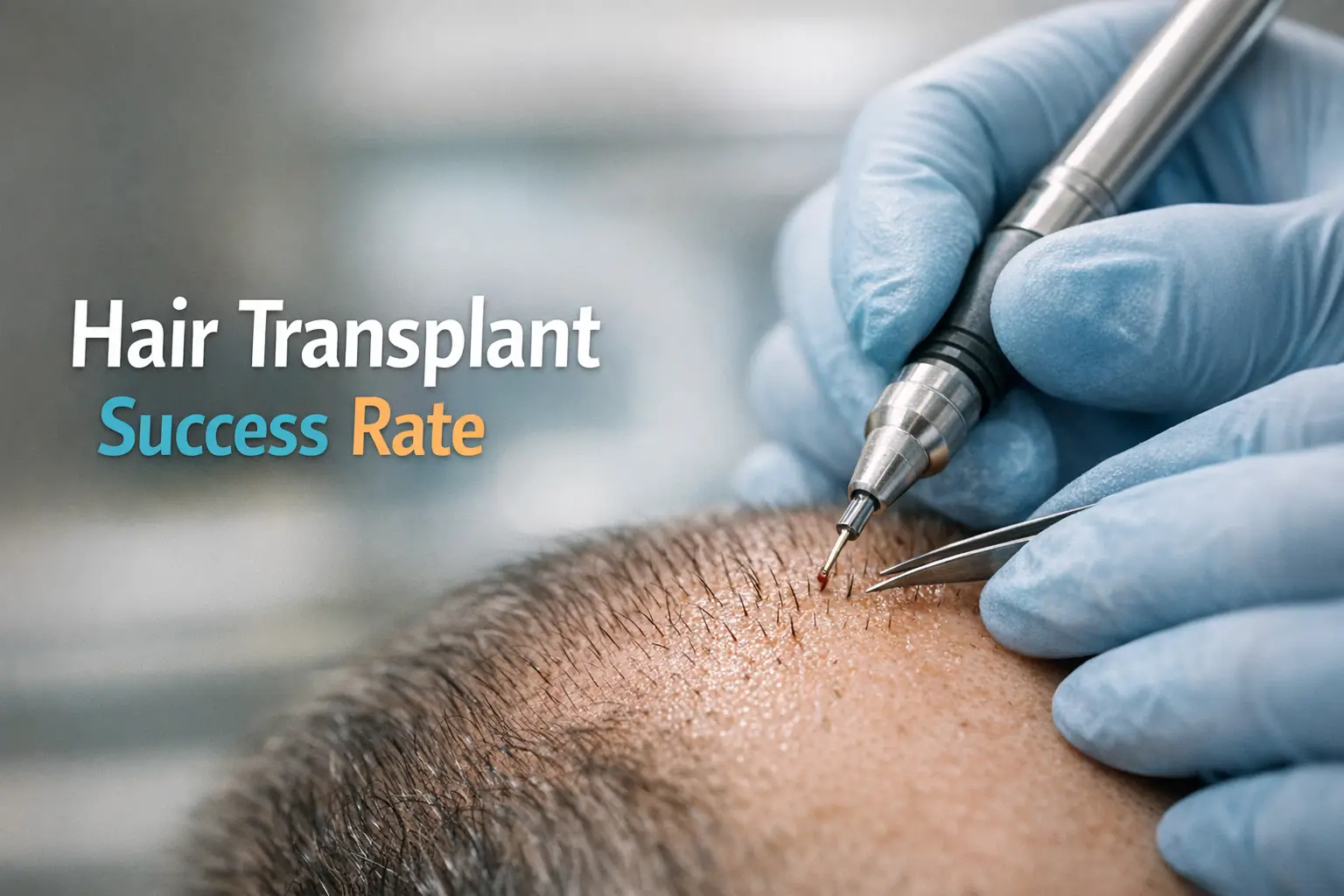
Hair loss can significantly affect self-confidence, and hair transplantation has become one of the most reliable long-term solutions. However, success is not only about hair growth but also about achieving natural density, proper hair direction, and long-term graft survival.Procedures performed by experienced specialists emphasize both medical precision and aesthetic planning, which are essential for consistent and natural-looking outcomes.
Hair transplant success rates generally fall between 75% and 95%, depending on multiple clinical and patient-related factors.
- FUE (Follicular Unit Extraction): 90–95% success rate
- FUT (Follicular Unit Transplantation): 85–90% success rate
These percentages represent the number of transplanted grafts that successfully survive and produce healthy hair.
A high success rate depends not only on the technique but also on proper graft extraction, preservation of follicle integrity, and strategic planning of hairline design.
Hair transplant success is defined by graft survival, natural appearance, and long-term hair growth stability.
Factors Influencing Procedure Outcomes And Risks
The most important factors affecting hair transplant success are donor area quality, surgical expertise, and post-operative care.
- Cause of Hair Loss: Genetic hair loss (androgenetic alopecia) responds best to transplantation.
- Donor Area Quality: High-density donor areas significantly increase success rates.
- Technique Used: Modern techniques like FUE and DHI provide more precise implantation.
- Surgeon’s Experience: An experienced team minimizes graft damage and ensures correct hair direction.
- Post-Operative Care: Proper aftercare directly affects graft survival and healing quality.
The combination of surgical precision and healthy donor follicles is the key determinant of long-term success.
Recovery Timeline And Signs Of Successful Growth
Hair transplant recovery typically begins within 7–10 days, while visible hair growth starts around 3–4 months after the procedure.
- Reduction of redness and scabbing within 10–14 days
- New hair growth beginning around the third month
- Increased density between 6–12 months
- Natural hair direction and improved coverage
Mild redness and shedding are normal parts of the healing process. However, unusual symptoms should always be evaluated by a medical professional.
Cost Considerations and Value Assessment
Hair transplant cost depends on graft number, technique, clinical expertise, and post-operative care quality rather than a fixed price range.
In practice, pricing can vary significantly depending on the scope of the procedure and the level of medical experience involved. For this reason, evaluating cost alone rarely provides an accurate picture of the overall value.
Turkey, particularly Istanbul, has become a global hub for hair transplantation thanks to experienced medical teams, modern techniques, and well-structured services designed for international patients.
Clinics in Istanbul typically combine medical expertise with patient-focused care. This includes detailed treatment planning, multilingual communication, and organized follow-up processes that support long-term results.
Hair transplantation in Turkey is widely considered a high-value medical procedure due to the balance between quality standards, clinical experience, and international patient support.
Rather than focusing solely on price, it is generally more reliable to evaluate factors such as the consistency of results, the experience of the medical team, and long-term graft survival.
Comparing Techniques: FUE Vs FUT Success Rates
| Feature | FUE (Follicular Unit Extraction) | FUT (Follicular Unit Transplantation) |
|---|---|---|
| Success Rate | 90–95% | 85–90% |
| Recovery Time | 7–10 days | 10–14 days |
| Scarring | Minimal | Linear |
| Natural Look | High | High |
| Procedure Type | Individual extraction | Strip method |
FUE is generally preferred due to minimal scarring and faster recovery, although both techniques can achieve high success rates.
Hair Transplant Success Rate Cost
Hair transplant pricing varies depending on graft count, technique, and clinic standards rather than a fixed cost.
- Total graft requirement
- Included services such as consultation and follow-up
- Technique used (FUE or FUT)
- Surgeon experience and clinic reputation
Hair transplantation should be considered a long-term investment in appearance and confidence rather than a short-term expense.
Frequently Asked Questions
What is the average hair transplant success rate?
Hair transplant success rate is typically between 90% and 95% when performed under optimal conditions.
Is hair transplant permanent?
Yes, transplanted hair is generally permanent because it is resistant to hair loss hormones.
When does transplanted hair start growing?
New hair growth usually begins around 3–4 months after the procedure.
What affects hair transplant success the most?
The most important factors are surgeon experience, donor area quality, and correct technique.
Is hair transplant safe in Turkey?
Hair transplantation in Turkey is considered safe when performed in certified and experienced clinics.
Which technique has the highest success rate?
FUE and DHI techniques offer the highest success rates when performed correctly.
References
- Bernstein RM, Rassman WR, et al. Follicular Unit Transplantation: 2003. Dermatol Surg. 2003;29(6):720-728. PMID: 12885297
- Jimenez F, Ruifernández M. Hair Transplantation: Follicular Unit Extraction (FUE) vs Follicular Unit Transplantation (FUT). Dermatol Clin. 2018;36(2):145-154. DOI: 10.1016/j.det.2017.12.007
- Shapiro R, Kaufman KD. Hair Transplantation: Techniques and Outcomes. J Am Acad Dermatol. 2019;80(4):1035-1043.
- American Academy of Dermatology Association. Hair Loss: Diagnosis and Treatment. Available at: https://www.aad.org/public/diseases/hair-loss
- International Society of Hair Restoration Surgery. Patient Guide to Hair Transplantation. Available at: https://ishrs.org/patient-guide/