
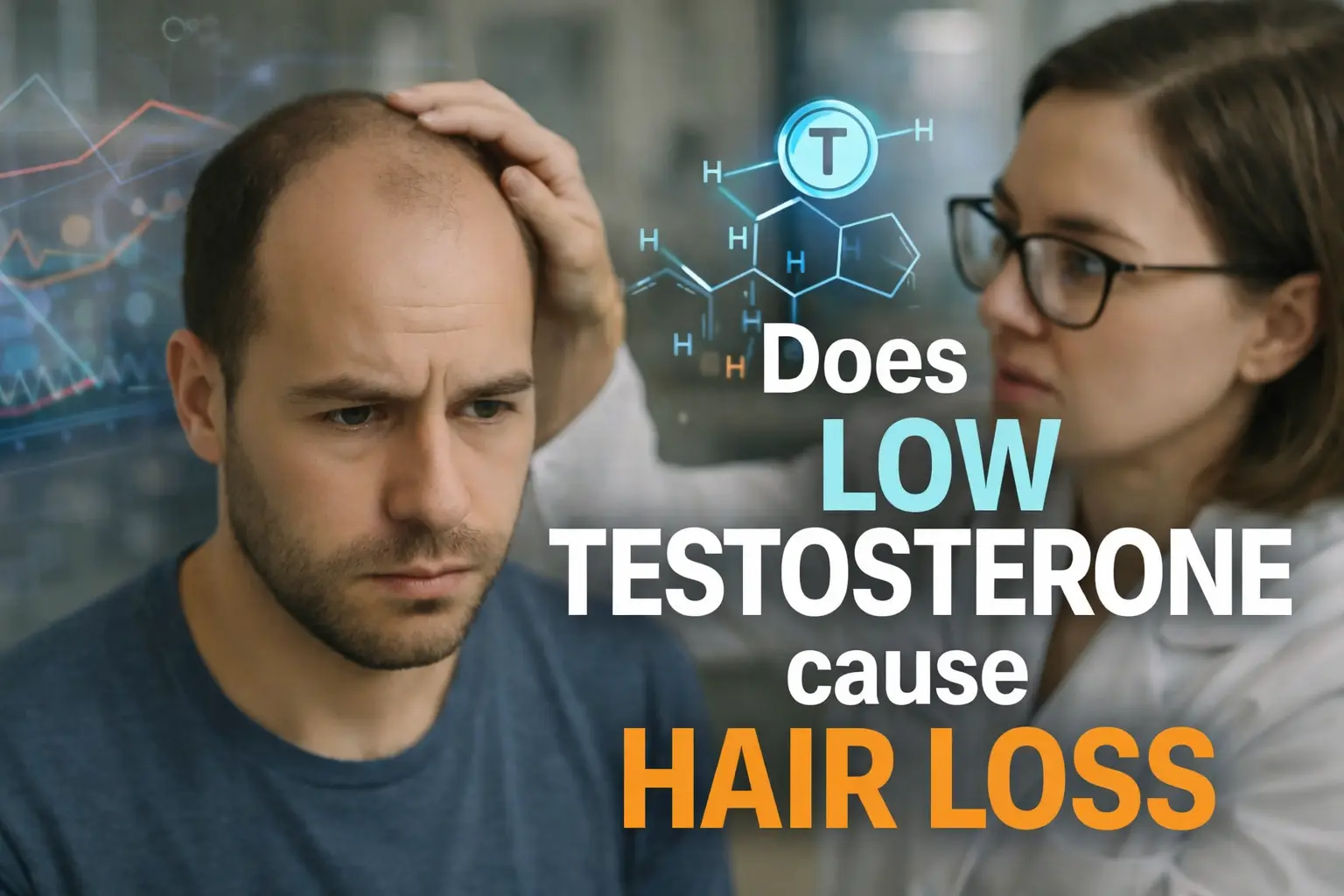
How the Relationship Between Low Testosterone and Hair Loss Works
Low testosterone alone usually does not directly cause hair loss. Instead, DHT, a hormone derived from testosterone, plays a major role in hair follicle shrinkage and male pattern baldness.
DHT binds to androgen receptors in hair follicles, shortening the hair growth phase and causing thinning. Low testosterone may weaken hair follicles indirectly by disrupting hormonal balance, but other factors like genetics and age have a stronger impact on hair loss.
Testosterone levels naturally decline with age, often coinciding with hair thinning, but this correlation does not prove causation. Hair loss related to low testosterone tends to be more diffuse rather than following typical baldness patterns.
Hormonal imbalances involving low testosterone can reduce hair density and increase shedding over time.
Signs That Low Testosterone May Affect Hair
Low testosterone-related hair loss usually occurs along with other symptoms of hormonal imbalance. These signs help distinguish it from other types of hair loss.
- General thinning and less dense hair across the scalp
- Reduced body hair on arms, legs, chest, and face
- Persistent fatigue and low energy
- Decreased sexual desire or libido
- Loss of muscle mass and increased body fat
- Mood changes such as irritability or depression
Hair thinning alone does not confirm low testosterone, so medical evaluation and hormone testing are important for diagnosis.
Low testosterone can affect hair quality and growth by altering the hormonal environment that supports follicle health.
How Hair Loss from Low Testosterone Differs from Other Causes
Hair loss due to low testosterone presents as widespread thinning with systemic symptoms, unlike the patterned baldness seen in androgenetic alopecia.
Androgenetic alopecia is driven by high levels of DHT and genetic sensitivity, causing hair loss mainly at the temples and crown. In contrast, low testosterone hair loss is more diffuse and accompanied by fatigue, muscle loss, and libido changes.
| Cause | Hair Loss Pattern | Symptoms | Testosterone Relation |
|---|---|---|---|
| Androgenetic Alopecia (Genetic) | Thinning at temples and crown, progressing to baldness | Family history, sensitivity to DHT | High DHT, normal or high testosterone |
| Low Testosterone | Widespread thinning, reduced body hair | Low energy, muscle loss, decreased libido | Low testosterone levels |
| Stress and Nutritional Deficiency | Temporary shedding across scalp | Fatigue, poor diet, high stress | Possible hormonal changes, no direct testosterone effect |
| Medical Conditions (Thyroid, Anemia) | Diffuse hair loss | Symptoms of underlying illness | Hormonal imbalance possible, no specific testosterone link |
Stress and medical illnesses can cause hair shedding but usually do not involve testosterone changes directly. Understanding these differences guides appropriate treatment.
Health Risks of Untreated Low Testosterone
Untreated low testosterone can lead to significant health issues beyond hair loss. These include muscle loss, bone weakening, sexual dysfunction, and mood disorders.
- Loss of muscle mass and strength
- Reduced bone density and higher fracture risk
- Sexual difficulties such as low libido and erectile dysfunction
- Mood changes including depression and irritability
- Increased cardiovascular disease risk
- Fatigue and decreased quality of life
Addressing low testosterone early improves overall health and may help prevent worsening hair loss.
Hormonal balance plays a crucial role in maintaining physical and mental wellbeing.
Treating Hair Loss Related to Low Testosterone
Treatment for hair loss from low testosterone focuses on restoring hormone levels and supporting hair follicle health. Personalized plans often combine hormone therapy, topical treatments, and lifestyle changes.
- Testosterone Replacement Therapy (TRT): Restores testosterone to normal levels and may improve hair density, energy, and libido.
- Topical Hair Treatments: Minoxidil and similar products stimulate hair follicles and encourage regrowth.
- Nutrition and Lifestyle: A balanced diet rich in hair-supporting nutrients and stress management supports hair health.
- Medical Follow-up: Regular hormone testing and check-ups ensure safe and effective treatment.
Hair regrowth and symptom improvement typically begin within 3 to 6 months of treatment. Consistency is key to achieving the best results.
Combining medical treatment with healthy habits enhances hair restoration efforts.
Quick Answers
- Low testosterone rarely causes hair loss by itself but can contribute to thinning.
- DHT, derived from testosterone, is the main hormone linked to male pattern baldness.
- Low testosterone hair loss tends to be diffuse and comes with fatigue and muscle loss.
- Testosterone replacement therapy can improve hair loss and overall wellbeing.
- Early diagnosis and combined treatments offer the best chance for hair regrowth.
Frequently Asked Questions
Does low testosterone cause hair loss in women?
Low testosterone can contribute to hair thinning in women when hormonal balance is disrupted, but it is rarely the sole cause. Other factors like thyroid issues, stress, and nutrition also play important roles.
Can hair loss from low testosterone be reversed?
Hair loss linked to low testosterone can often be slowed or partially reversed with early treatment, including hormone therapy, topical products, and lifestyle changes.
Is hair loss from low testosterone permanent?
Without treatment, hair loss may worsen and become permanent due to follicle damage. Early intervention improves chances of regrowth and prevents further loss.
What tests check testosterone levels?
Blood tests measuring total and free testosterone levels are standard. Additional hormone tests may be ordered for a comprehensive assessment.
Are there side effects of testosterone replacement therapy?
Possible side effects include acne, sleep apnea, increased red blood cells, prostate enlargement, and mood changes. Medical supervision is essential during therapy.
How long does it take to see hair improvement after treatment?
Hair regrowth usually begins between 3 and 6 months after starting treatment, but results vary. Patience and adherence to therapy are important.
Can lifestyle changes alone improve hair loss related to low testosterone?
Healthy diet, exercise, and stress management support hair health but may not be sufficient alone. Combining lifestyle changes with medical treatment is often more effective.