
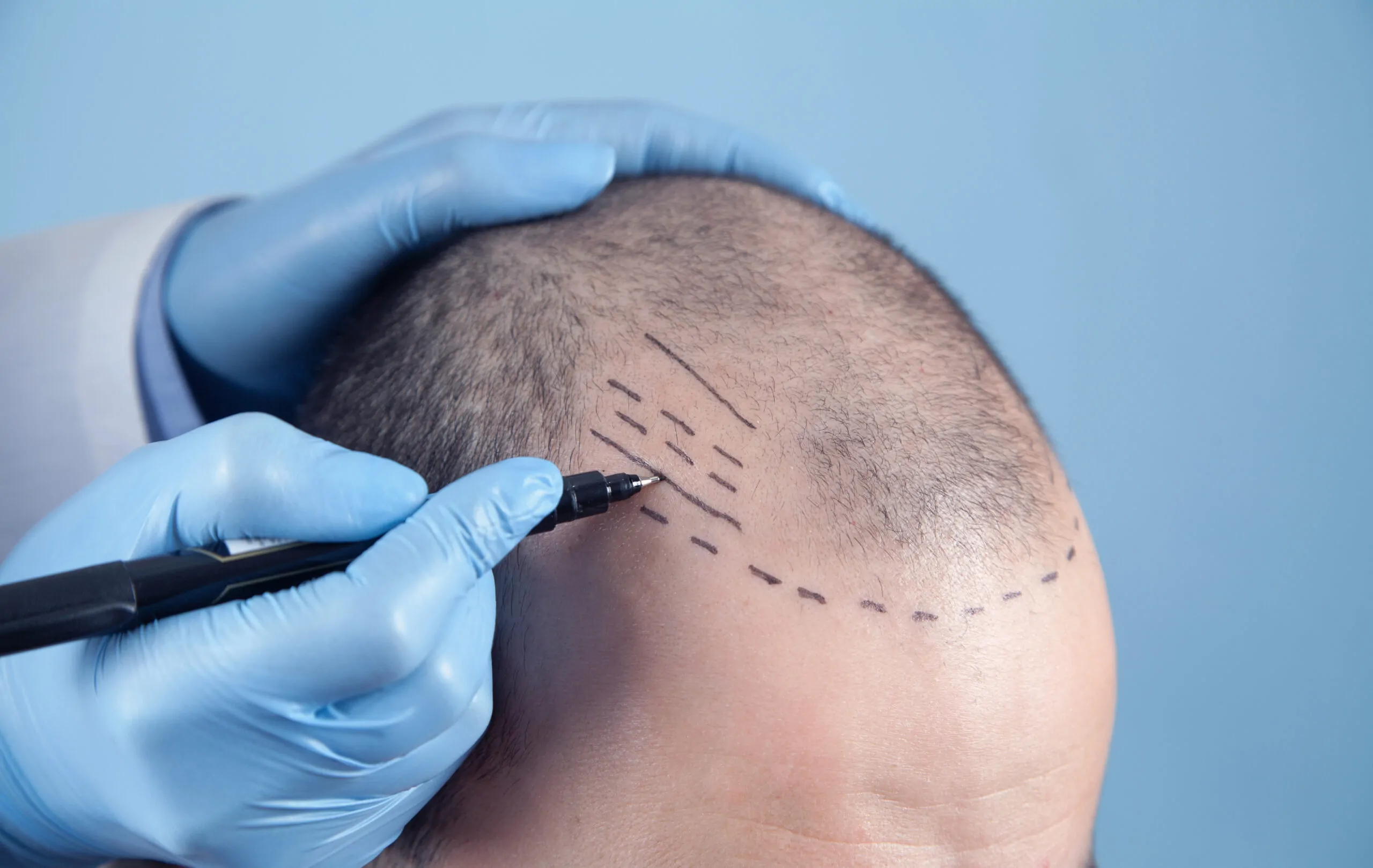
How Much Does a 5000 Grafts Hair Transplant Cost in Turkey?
The cost of a 5000 grafts hair transplant in Turkey varies according to the patient’s individual treatment plan. Unlike smaller procedures, a large graft session requires more detailed donor evaluation, longer procedural planning, and careful distribution of grafts across the recipient area.
In many European countries and the United States, hair transplant pricing is often calculated per graft or structured around higher facility and professional costs. In Turkey, many clinics use package-based planning, which may include medical evaluation, the procedure itself, post-operative care, and support services for international patients.
Patients should be cautious with offers that focus only on a large graft number. A medically responsible plan should explain whether 5000 grafts are truly appropriate, how the donor area will be protected, and what level of density can realistically be achieved.
What Affects the Final Cost?
The final cost is not determined by graft number alone. Two patients may both request 5000 grafts, but their treatment plans can be very different depending on donor quality, hair characteristics, technique selection, and whether the procedure is primary or corrective.
The most common factors that influence cost include:
- Donor area density and safe extraction capacity
- Size of the recipient area
- Hairline, mid-scalp, and crown coverage needs
- FUE, DHI, or Sapphire FUE technique selection
- Hair shaft thickness and hair-to-scalp contrast
- Whether the case is a first procedure or repair case
- Post-operative care and follow-up requirements
- Accommodation, transfer, and interpreter support for international patients
A transparent consultation should explain these factors clearly before the procedure. This helps patients compare clinics based on medical planning rather than only advertised graft numbers.
5000 Grafts Hair Transplant Cost: Turkey vs Europe vs USA
Turkey is widely preferred by international patients because overall treatment costs are generally more accessible than in many European countries and the United States. This difference is usually related to healthcare infrastructure, operational expenses, exchange-rate advantages, and the high level of medical tourism organization in Turkey.
Lower cost does not automatically mean lower quality, but it also should not be the only reason to choose a clinic. The medical plan, donor safety, hygiene standards, follow-up process, and natural design approach are more important than price alone.
| Region | General Cost Pattern | Common Pricing Structure | Patient Consideration |
|---|---|---|---|
| Turkey | Generally more accessible for international patients | Often package-based | Technique, donor planning, and clinic standards should be reviewed carefully |
| Europe | Usually higher overall treatment cost | Often per-graft or clinic-based pricing | Costs may vary significantly by country and clinic |
| United States | Often among the higher-cost regions | Commonly per-graft or surgeon-fee based | Facility fees and regional costs may affect total pricing |
Is 5000 Grafts Suitable for Every Patient?
No. A 5000 grafts hair transplant is not suitable for every patient. Donor hair is limited, and removing too many grafts without proper planning may create visible thinning in the donor area or reduce future transplant options.
Before recommending a large session, our medical team evaluates donor density, hair shaft quality, scalp condition, hair loss pattern, age, expectations, and long-term planning needs. In some cases, a staged approach may be safer than trying to complete all coverage in one session.
Patients considering a high graft number should understand the risk of an overharvested donor area, especially if donor extraction is aggressive or poorly distributed.
Why Donor Area Planning Matters in Large Graft Sessions
Donor area planning is one of the most important parts of a 5000 graft procedure. Once grafts are extracted from the donor region, they do not grow back in the same place. This means every graft should be used strategically.
A strong plan protects the donor area while improving the areas that matter most visually, such as the frontal hairline and mid-scalp. If grafts are spread too widely across a large bald area, the result may look thin even when the transplanted hairs grow successfully.
When patients feel their result looks sparse or lacks coverage after a previous procedure, the concern may be related to low density hair transplant results. This is why density planning and donor protection should be discussed before surgery.
DHI, FUE or Sapphire FUE for 5000 Grafts?
The best technique depends on the patient’s donor area, recipient area, hair characteristics, and treatment goals. There is no single technique that is ideal for every 5000 graft case.
FUE hair transplant is commonly used for individual follicular unit extraction and may be suitable for larger sessions when donor planning is appropriate. DHI hair transplant may be considered when controlled implantation and density planning are important. Sapphire hair transplant may be preferred in selected cases depending on channel planning and recipient area needs.
| Technique | Possible Advantage | Planning Consideration |
|---|---|---|
| FUE | Allows individual graft extraction without a linear donor incision | Extraction pattern must protect donor density |
| DHI | Allows controlled implantation in selected cases | May not be the most practical option for every large-session case |
| Sapphire FUE | May support precise recipient channel planning | Suitability depends on scalp and graft characteristics |
What Should Patients Expect Before and After a 5000 Graft Hair Transplant?
Before the procedure, patients should receive a detailed consultation, donor area analysis, hairline planning, medical evaluation, and clear post-operative instructions. Preparation helps reduce avoidable risks and improves the overall treatment experience.
After the procedure, shedding in the early weeks is expected. New growth usually develops gradually, and final maturation takes time. Patients should avoid judging the final result too early because transplanted hair follows a natural growth cycle.
For a safer preparation process, patients can review our guide on before hair transplantation.
How to Avoid Poor Results in a 5000 Graft Hair Transplant
A large graft session should be planned with caution. Poor planning may lead to an unnatural hairline, visible donor thinning, low density, graft survival problems, or the need for repair later.
Patients should ask how the donor area will be protected, whether the planned density is realistic, and how the hairline will age over time. These questions matter as much as the total graft number.
Our guide on hair transplant gone wrong explains the warning signs, causes, and repair options related to unsuccessful procedures.
Who Is a Suitable Candidate?
A 5000 grafts hair transplant may be suitable for patients who need broad coverage and have enough donor strength to support a larger session. Suitability should always be confirmed after medical evaluation.
- Patients with moderate to advanced hair loss
- Individuals with strong donor density
- Patients with stable scalp health
- Individuals who understand realistic density limits
- Patients needing frontal, mid-scalp, or crown coverage
- People who can follow post-operative care instructions
Who May Not Be Suitable?
Some patients may be better served with a smaller session, staged treatment, or non-surgical support before considering a large graft procedure.
- Patients with weak or depleted donor areas
- Individuals with diffuse thinning in the donor zone
- Patients with active scalp inflammation or untreated skin disease
- People expecting maximum density from one session
- Patients with medical conditions that may affect healing
- Individuals who may need long-term staged planning
Clinical Experience
In our clinical experience, patients who ask for 5000 grafts usually want the strongest possible coverage, but the first clinical question is always donor safety. A slightly more conservative plan can sometimes create a better long-term result than using the highest possible graft number in one session.
Medical Review
This article has been medically reviewed for accuracy, balance, and alignment with current hair restoration principles. Information about cost, graft planning, suitability, and risk reduction is presented to support realistic expectations and medically responsible decision-making.
Frequently Asked Questions
How much is 5000 grafts hair transplant in Turkey?
The cost depends on technique selection, donor area condition, clinic infrastructure, and the patient’s individual treatment plan. A medical consultation is necessary to confirm suitability and final pricing.
Is 5000 grafts a large hair transplant?
Yes. A 5000 graft session is considered a large hair transplant and requires strong donor capacity. Not every patient can safely support this graft number.
Is Turkey a good option for 5000 grafts hair transplant?
Turkey is a common destination for international hair transplant patients because treatment costs are generally more accessible than in Europe and the United States. Patients should still evaluate clinic standards, donor planning, and medical follow-up carefully.
Can 5000 grafts damage the donor area?
It can if graft extraction is too aggressive or poorly distributed. Careful donor planning is essential to reduce the risk of visible thinning or donor depletion.
Which technique is better for 5000 grafts: DHI or FUE?
There is no single best technique for every patient. FUE, DHI, or Sapphire FUE may be considered depending on donor characteristics, recipient area needs, and the medical plan.
Can 5000 grafts cover the crown and hairline?
It may help cover multiple areas in suitable patients, but coverage depends on scalp size, hair quality, and graft distribution. Some patients may need staged planning for better long-term results.
How long does it take to see results after 5000 grafts?
Early growth often begins after several months, while final maturation may take 12 to 18 months. Growth speed and final density vary from patient to patient.
Additional FAQs
Is one session enough for 5000 grafts?
Some patients may complete treatment in one session, while others may require staged planning. The safest approach depends on donor area strength and treatment complexity.
Can women have a 5000 grafts hair transplant?
Some women may be suitable, but female hair loss patterns require careful diagnosis. Suitability depends on donor stability, thinning pattern, and scalp condition.
Does a lower cost mean lower quality?
No. Cost differences between countries are often related to healthcare infrastructure and operational factors. Medical planning, clinic standards, and follow-up care remain essential.
Scientific References
View Scientific References
Follicular Unit Extraction: Minimally Invasive Surgery for Hair Transplantation
Rassman WR, Bernstein RM, McClellan R, Jones R, Worton E, Uyttendaele H. Dermatologic Surgery. 2002;28(8):720-728. PMID: 12174065. DOI: 10.1046/j.1524-4725.2002.01320.x.
Follicular Unit Transplantation: 2005
Bernstein RM, Rassman WR. Dermatologic Clinics. 2005;23(3):393-414. PMID: 16039422. DOI: 10.1016/j.det.2005.04.002.
Hair Transplantation: Basic Overview
Jimenez F, Alam M, Vogel JE, Avram M. Journal of the American Academy of Dermatology. 2021. PMID: 33905785. DOI: 10.1016/j.jaad.2021.03.124.
A Scoping Review on Complications in Modern Hair Transplantation
Liu RH, et al. Dermatologic Surgery. PMID: 39179656. DOI: 10.1097/DSS.0000000000004260.