
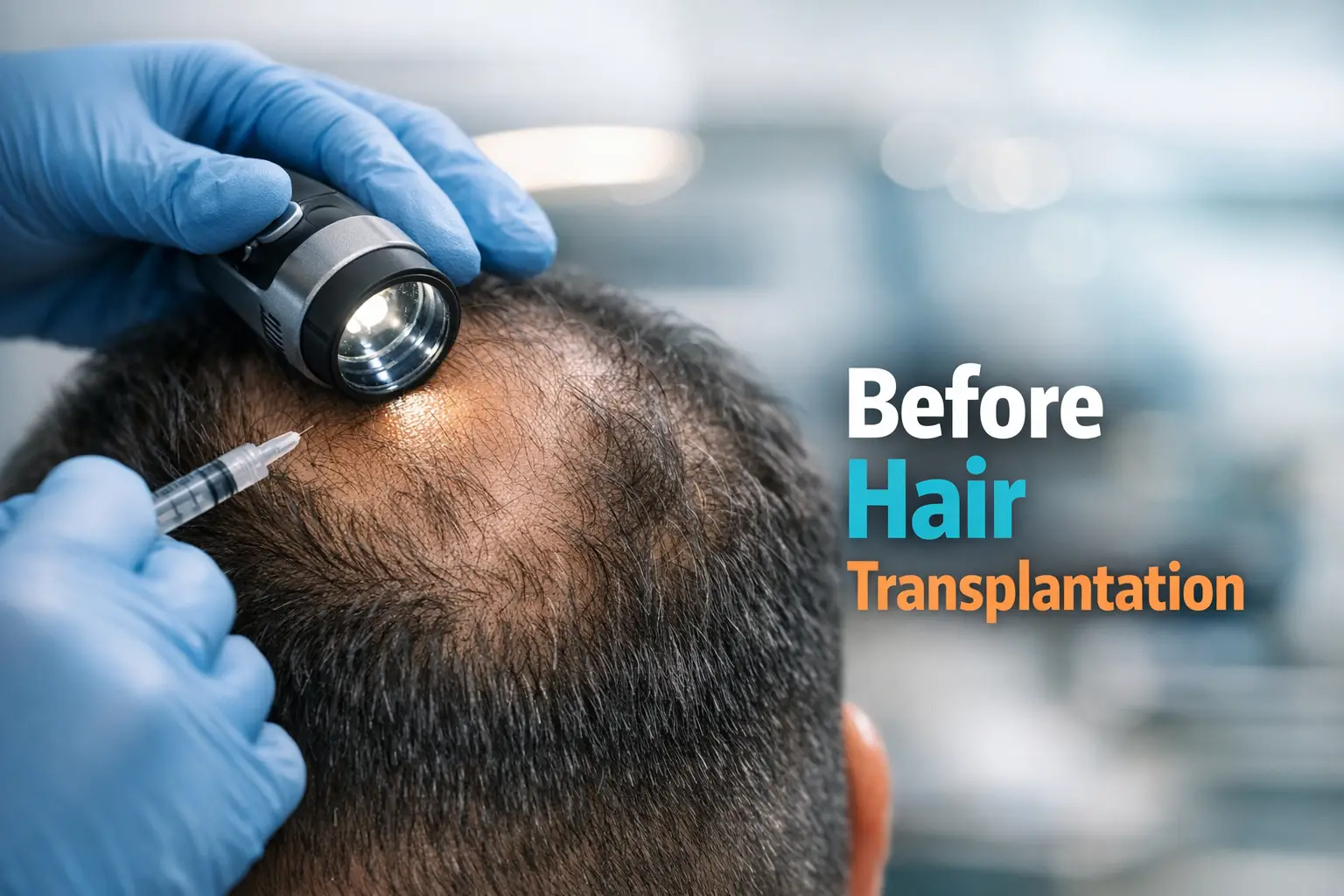
Hair transplant preparation is not only about the day of surgery. It includes donor area assessment, hair loss diagnosis, graft planning, medical safety checks, and realistic expectation setting before the procedure.
At Quartz Hair Clinic in Istanbul, our medical team evaluates each patient individually before recommending DHI, FUE, Sapphire FUE, unshaven hair transplant, or a staged treatment plan.
Why Preparation Matters Before Hair Transplantation
Preparation before hair transplantation helps reduce avoidable risks and supports a smoother procedure. The medical team needs to understand the patient’s hair loss pattern, donor area strength, medical history, medications, and expectations before deciding the safest plan.
A well-prepared patient is more likely to understand what the procedure can and cannot achieve. This is especially important because hair transplantation depends on limited donor hair, not unlimited graft availability.
Poor preparation may lead to unrealistic density goals, unsuitable technique selection, unnecessary donor stress, or disappointment during recovery. Patients who want to understand poor outcome risks can read our guide on hair transplant gone wrong.
Medical Evaluation Before Hair Transplantation
A medical evaluation is one of the most important steps before hair transplantation. It helps determine whether the patient is suitable for surgery and whether any health factors may affect healing or graft growth.
During the evaluation, the medical team may ask about medical conditions, previous surgeries, allergies, regular medications, blood thinners, smoking habits, scalp diseases, and family history of hair loss.
- Hair loss pattern and progression
- Donor area density and stability
- Scalp health and skin conditions
- Current medications and supplements
- Previous hair transplant history
- Expectations about density and hairline design
Patients should share their medical history honestly. Even small details can affect treatment planning, anesthesia safety, and recovery instructions.
Donor Area Assessment Before Hair Transplant
The donor area is the foundation of every hair transplant plan. Before the procedure, the medical team evaluates how many grafts can be extracted safely without creating visible thinning or overharvesting.
Not every patient with hair loss is suitable for a high graft number. If the donor area is weak, diffuse, or unstable, the plan may need to be more conservative.
Overly aggressive extraction can damage the long-term appearance of the donor region. Patients can learn more in our guide on overharvested donor area.
Choosing the Right Technique Before Hair Transplantation
Technique selection should be based on medical suitability, not only on patient preference or online trends. DHI, FUE, Sapphire FUE, and unshaven hair transplant may each be useful in different situations.
The best technique depends on graft count, recipient area size, donor condition, hairline goals, scalp structure, and whether shaving is acceptable for the patient.
| Technique | When It May Be Considered | Planning Focus |
|---|---|---|
| DHI Hair Transplant | Hairline refinement, temples, selected density areas, or partial shaving cases | Controlled angle, depth, and direction during implantation |
| FUE Hair Transplant | Broader coverage, larger graft sessions, frontal region, mid-scalp, or crown planning | Safe extraction, channel planning, and graft distribution |
| Sapphire Hair Transplant | Selected FUE-based cases where sapphire-tipped blades are used for channel creation | Precise recipient channel planning in suitable patients |
| Unshaven Hair Transplant | Patients who want partial or minimal shaving when medically suitable | Discreet planning without compromising graft safety |
Patients comparing techniques can also review our detailed guide on DHI vs FUE hair transplant.
What to Do Before Hair Transplantation
Before hair transplantation, patients should follow the instructions provided by their medical team. These instructions may vary depending on health status, medications, and the planned technique.
General preparation often includes avoiding alcohol, reviewing medications, protecting scalp health, and arriving well-rested on the day of the procedure.
- Share all medications and supplements with the medical team
- Follow instructions about blood-thinning medications if applicable
- Avoid alcohol before the procedure as advised
- Reduce or stop smoking according to medical guidance
- Keep the scalp clean and avoid irritation
- Do not apply styling products on the day of surgery unless instructed otherwise
- Sleep well before the procedure
- Wear comfortable clothing that does not need to be pulled tightly over the head
Medications and Supplements Before Hair Transplant
Medication review is essential before hair transplantation. Some medications and supplements may increase bleeding risk, affect healing, or interact with anesthesia.
Patients should not stop prescribed medications without medical advice. Instead, they should inform the medical team about everything they use regularly, including vitamins, herbal products, and over-the-counter pain relievers.
- Blood thinners
- Aspirin or anti-inflammatory drugs
- Herbal supplements
- High-dose vitamins
- Hormonal medications
- Medications for heart disease, blood pressure, diabetes, or thyroid conditions
The medical team will decide whether any medication needs special handling before the procedure.
Smoking Before Hair Transplant
Smoking may affect blood circulation and wound healing. For this reason, patients are usually advised to reduce or stop smoking before and after hair transplantation according to medical guidance.
Good blood supply is important for scalp healing and graft support. Patients who smoke should be honest about their smoking habits so the medical team can provide realistic instructions.
Stopping smoking for a short period may be difficult for some patients, but even temporary reduction can help support a safer recovery plan.
Alcohol Before Hair Transplant
Alcohol should generally be avoided before hair transplantation as advised by the medical team. Alcohol may affect hydration, bleeding tendency, sleep quality, and recovery comfort.
Patients should also avoid arriving at the clinic tired, dehydrated, or under the influence of alcohol. A stable general condition helps the procedure day go more smoothly.
The exact timing for avoiding alcohol should be confirmed during consultation because recommendations may vary depending on the patient and clinic protocol.
What to Eat Before Hair Transplant
Nutrition before hair transplantation should be simple and balanced. Patients should avoid extreme dieting, heavy alcohol intake, or skipping meals unless the medical team gives different instructions.
A light, balanced meal before the procedure may help the patient feel more comfortable, especially if the session is expected to last several hours. Hydration is also important.
- Choose balanced meals with protein, vegetables, and complex carbohydrates
- Avoid excessive caffeine if advised
- Drink enough water before the procedure
- Avoid very heavy or greasy meals immediately before surgery
- Follow fasting instructions if sedation or a specific anesthesia plan is used
Scalp and Hair Care Before Hair Transplantation
Scalp health should be stable before hair transplantation. Active inflammation, infection, severe dandruff, or untreated scalp disease may need evaluation before surgery.
Patients should wash their hair as instructed before the procedure and avoid applying gels, sprays, oils, powders, or cosmetic fibers on the day of surgery unless the clinic advises otherwise.
Patients with scalp itching, redness, scaling, or wounds should inform the medical team before the procedure date.
Hair Length and Shaving Before Hair Transplant
Hair length and shaving instructions depend on the selected technique. Some patients may need full shaving, while others may be suitable for partial or unshaven planning.
Patients should not shave or cut their hair before the procedure unless instructed. The medical team may need to evaluate the natural hair direction, density, and coverage before deciding how much trimming is necessary.
Patients who want a more discreet approach can review our guide on unshaven hair transplant in Turkey.
Planning the Hairline Before Hair Transplant
Hairline planning should be realistic, age-appropriate, and consistent with the patient’s donor capacity. A very low or very dense hairline may look unnatural or consume too many grafts too early.
The best hairline is not always the lowest hairline. It should match facial proportions, hair loss progression, donor reserves, and long-term planning.
If the hairline is designed incorrectly, the result may look artificial even if the grafts grow well. Our guide on unnatural hairline after hair transplant explains this issue in more detail.
Preparing for Large Graft Sessions
Patients who need a large number of grafts require especially careful preparation. Large sessions may involve wider recipient areas, longer procedure time, and more detailed donor management.
Before planning a high-graft procedure, the medical team should assess whether the donor area can support the requested number safely. Not every patient is suitable for a large single-session plan.
Patients researching large procedures can read our guide on 5000 grafts hair transplant cost in Turkey to understand how graft number, donor safety, and planning complexity affect treatment decisions.
Cost Planning Before Hair Transplantation
Hair transplant cost should be discussed before the procedure after individual evaluation. The final cost depends on graft count, technique selection, donor condition, recipient area size, procedure complexity, clinic infrastructure, and post-operative follow-up.
Turkey generally offers more accessible hair transplant costs compared with many clinics in Europe and the United States. This difference is usually related to healthcare infrastructure, operational costs, regional economic factors, and the organization of medical tourism services.
Patients should avoid choosing a clinic based only on price. A safe plan should prioritize donor protection, natural hairline design, hygiene standards, graft handling, and realistic density planning.
| Cost Factor | Why It Matters Before Surgery |
|---|---|
| Graft Count | Affects procedure time, donor planning, and coverage strategy |
| Technique Selection | DHI, FUE, Sapphire FUE, and unshaven planning may require different workflows |
| Donor Area Condition | Weak donor areas may require conservative or staged planning |
| Recipient Area Size | Larger areas may require careful density distribution |
| Follow-Up Care | Post-operative support helps guide washing, healing, and recovery expectations |
Who Is a Suitable Candidate for Hair Transplantation?
A suitable candidate usually has stable hair loss, adequate donor hair, realistic expectations, and no uncontrolled medical condition that would significantly affect healing.
- Patients with androgenetic hair loss and adequate donor reserves
- Patients with stable or medically evaluated hair loss
- Individuals who understand gradual growth timelines
- Patients with realistic density expectations
- Patients who can follow aftercare instructions
- Individuals with healthy or medically managed scalp condition
Can People Living with HIV Have a Hair Transplant?
People living with HIV may be considered for hair transplantation if their condition is well controlled, their viral load is undetectable or medically stable, and their immune status is suitable for surgery. HIV status alone does not automatically exclude a patient from hair transplantation.
Before surgery, the medical team should review the patient’s viral load, CD4 count, current antiretroviral treatment, general health, scalp condition, and healing risk. In some cases, coordination with the patient’s infectious disease specialist may be recommended.
Hair transplantation may need to be postponed if HIV is not medically controlled, if the immune system is significantly weakened, or if there is an active infection or untreated scalp condition. The decision should always be made after individual medical evaluation and with appropriate infection-control standards.
Who May Not Be Suitable or Needs Careful Evaluation?
Some patients may need additional evaluation before hair transplantation. In some cases, medical treatment, scalp therapy, or delayed surgery may be safer than immediate transplantation.
- Patients with very weak donor areas
- Individuals with diffuse thinning in the donor zone
- Patients with active scalp inflammation or infection
- Patients with uncontrolled medical conditions
- Individuals with unrealistic expectations about density
- Patients with rapidly progressive hair loss
- Patients who are too young for stable long-term planning
Female patients should also be evaluated carefully because not every type of female hair loss is suitable for surgery. Patients can review our guide on hair transplant for women for more information.
Questions to Ask Before Hair Transplantation
Patients should feel comfortable asking questions before the procedure. Clear communication helps prevent misunderstandings and supports realistic expectations.
- How many grafts can be extracted safely?
- Which technique is most suitable for my case?
- Will I need one session or staged treatment?
- How will my donor area be protected?
- What density can realistically be achieved?
- How will my hairline be designed?
- What should I avoid before and after surgery?
- When can I return to work or travel?
Before Hair Transplantation Checklist
The checklist below summarizes common preparation steps. Individual instructions may vary, so patients should always follow the plan provided by their medical team.
| Preparation Step | Why It Matters |
|---|---|
| Complete medical evaluation | Helps confirm safety and suitability |
| Review medications | Some medications may affect bleeding or healing |
| Avoid alcohol as advised | Supports hydration, comfort, and recovery planning |
| Reduce smoking as advised | Supports circulation and healing |
| Keep scalp clean | Reduces irritation and supports a safer procedure environment |
| Clarify expectations | Helps align graft planning with realistic outcomes |
Clinical Experience
In our clinical experience, the most useful consultations are the ones where patients openly discuss their expectations, lifestyle, and concerns before surgery. This helps the medical team plan the donor area more carefully and explain whether the patient’s desired density is realistic.
Medical Review
This article has been medically reviewed for accuracy, balance, and alignment with current hair restoration principles. The preparation guidance is intended to support safe decision-making, realistic expectations, and individualized medical evaluation before hair transplantation.
Frequently Asked Questions
What should I do before hair transplantation?
Before hair transplantation, you should complete a medical evaluation, review medications with the medical team, avoid alcohol as advised, protect scalp health, and follow preparation instructions. The exact plan may vary depending on your health and technique selection.
Can I smoke before hair transplant?
Smoking may affect circulation and wound healing, so patients are usually advised to reduce or stop smoking before and after the procedure. The timing should be confirmed with the medical team.
Can I drink alcohol before hair transplantation?
Alcohol is generally avoided before hair transplantation because it may affect hydration, sleep quality, bleeding tendency, and recovery comfort. Patients should follow the clinic’s specific timing instructions.
Should I cut or shave my hair before the procedure?
You should not cut or shave your hair unless instructed by the medical team. Hair length may be needed for donor assessment, hairline planning, or unshaven hair transplant evaluation.
What should I eat before hair transplant?
A balanced meal and good hydration are usually helpful before the procedure, unless you are given different instructions. If sedation or a specific anesthesia plan is used, fasting instructions may apply.
Which technique should I choose before hair transplantation?
The technique should be chosen after medical evaluation. DHI, FUE, Sapphire FUE, and unshaven planning may each be suitable in different cases depending on graft count, donor area, and recipient area needs.
How do I know if I am suitable for hair transplant?
Suitability depends on donor area strength, hair loss pattern, scalp health, medical history, and expectations. A consultation is needed to determine whether surgery, medical treatment, or staged planning is more appropriate.
Additional FAQs
Can I take vitamins before hair transplant?
You should tell the medical team about all vitamins and supplements you use. Some supplements may need to be paused if they can affect bleeding or healing.
Can I use minoxidil before hair transplant?
Minoxidil use should be discussed with the medical team before surgery. Some patients may be advised to pause it temporarily depending on scalp sensitivity and clinic protocol.
Can I travel before hair transplantation?
Many international patients travel for hair transplantation, but travel should be planned with enough time for consultation, procedure preparation, and early recovery. Patients should avoid arriving exhausted or dehydrated.
Is blood testing needed before hair transplant?
Pre-procedure tests may be requested depending on the clinic protocol and patient health status. These tests help support safe planning before surgery.
Scientific References
View Scientific References
Hair Transplantation: Basic Overview
Jimenez F, Alam M, Vogel JE, Avram M. Journal of the American Academy of Dermatology. 2021;85(4):803-814. PMID: 33905785. DOI: 10.1016/j.jaad.2021.03.124.
Follicular Unit Extraction: Minimally Invasive Surgery for Hair Transplantation
Rassman WR, Bernstein RM, McClellan R, Jones R, Worton E, Uyttendaele H. Dermatologic Surgery. 2002;28(8):720-728. PMID: 12174065. DOI: 10.1046/j.1524-4725.2002.01320.x.
Follicular Unit Transplantation: 2005
Bernstein RM, Rassman WR. Dermatologic Clinics. 2005;23(3):393-414. PMID: 16039422. DOI: 10.1016/j.det.2005.04.002.
A Scoping Review on Complications in Modern Hair Transplantation
Liu RH, Xu LJ, McCarty JC, Xiao R, Chen JX, Lee LN. Aesthetic Plastic Surgery. 2025;49:585-595. PMID: 39179656. DOI: 10.1007/s00266-024-04316-3.