
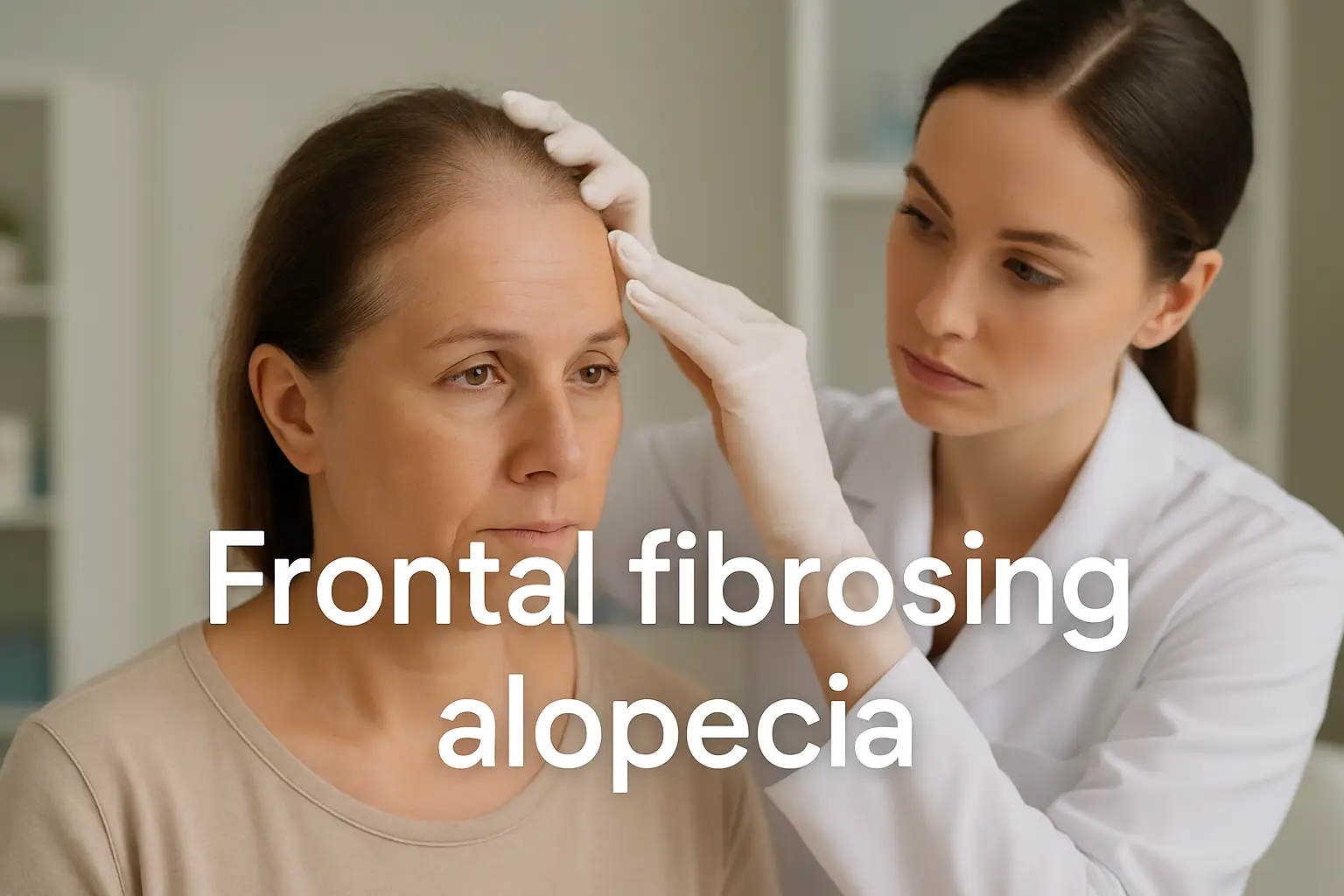
How the Causes and Risk Factors of Frontal Fibrosing Alopecia Works
The precise etiology of frontal fibrosing alopecia remains incompletely understood, but current evidence supports a multifactorial origin involving genetic, hormonal, autoimmune, and environmental components. FFA is classified as a variant of lichen planopilaris, an inflammatory scarring alopecia targeting hair follicles.
- Hormonal influences: The strong predominance of FFA in postmenopausal women suggests that declining estrogen levels may disrupt normal hair follicle cycling and immune regulation, contributing to disease onset.
- Autoimmune mechanisms: FFA involves an aberrant immune response where lymphocytic inflammation targets and destroys follicular epithelium, resulting in permanent scarring.
- Genetic predisposition: Familial clustering and emerging genetic studies indicate that hereditary factors may increase susceptibility, although specific genes remain under investigation.
- Environmental triggers: Some research has implicated certain skincare products, sunscreens (notably those containing titanium dioxide or chemical UV filters), and cosmetic procedures as potential exacerbating factors. However, definitive causal links are yet to be established.
Additional considerations include the possible role of hormonal therapies and lifestyle factors. Ongoing research aims to clarify these relationships to better inform prevention strategies and personalized treatment approaches.
Signs of Early and Diagnostic Approaches
Early detection of frontal fibrosing alopecia is vital to prevent extensive follicular damage and irreversible hair loss. The hallmark symptom is a progressive, symmetrical recession of the frontal hairline, often presenting as a band-like pattern. Eyebrow thinning or complete loss frequently accompanies this presentation.
- Scalp sensations such as itching, burning, or tenderness may indicate active inflammation.
- Perifollicular erythema and scaling around hair follicles are common clinical signs.
- Hair loss may extend to eyelashes, sideburns, and other facial hair regions.
- Dryness and subtle scaling of affected scalp areas may also be observed.
Diagnosis is primarily clinical, supported by dermoscopy which reveals characteristic features such as perifollicular scaling, loss of follicular openings, and follicular hyperkeratosis. A scalp biopsy is often essential to confirm the diagnosis, demonstrating lymphocytic inflammation targeting the follicular infundibulum and fibrosis replacing follicular structures.
Comprehensive patient history—including onset, progression, family history, and exposure to potential triggers—is integral to diagnosis. While blood tests assessing autoimmune markers or hormonal status may be informative, they are not diagnostic for FFA.
Effective Treatment Strategies and Prognosis
Currently, there is no definitive cure for frontal fibrosing alopecia. Treatment focuses on halting disease progression, controlling inflammation, and preserving remaining hair. Due to follicular scarring, hair regrowth is typically limited, underscoring the importance of early intervention.
- Topical corticosteroids: High-potency steroids help reduce local inflammation but require careful monitoring to avoid side effects such as skin atrophy.
- Systemic anti-inflammatory agents: Medications like hydroxychloroquine and doxycycline are frequently used for their immunomodulatory and anti-inflammatory properties.
- Calcineurin inhibitors: Tacrolimus ointment may serve as an alternative or adjunct to corticosteroids, particularly in patients with contraindications or intolerance.
- Hormonal therapies: Anti-androgens such as finasteride or dutasteride may be beneficial, especially in postmenopausal women, by reducing dihydrotestosterone (DHT) levels implicated in disease progression.
- Hair transplantation: Considered only after disease inactivity is confirmed, given the risk of graft failure due to ongoing inflammation and scarring.
- Emerging treatments: Platelet-rich plasma (PRP) injections and low-level laser therapy (LLLT) are under investigation, though current evidence remains inconclusive.
Long-term management often requires maintenance therapy and regular dermatologic follow-up to monitor disease activity and adjust treatment. Psychological support is also important, as FFA can significantly impact self-esteem and mental health.
Distinguishing Frontal Fibrosing Alopecia from Other Hair Loss Disorders
| Characteristic | Frontal Fibrosing Alopecia (FFA) | Androgenetic Alopecia (AGA) | Alopecia Areata (AA) |
|---|---|---|---|
| Cause | Autoimmune scarring inflammation | Genetic and hormonal factors | Autoimmune non-scarring |
| Hair loss pattern | Frontal hairline and eyebrows | Diffuse thinning on crown and temples | Patchy, sudden hair loss |
| Scarring | Yes, permanent follicle damage | No | No |
| Treatment focus | Reduce inflammation, prevent progression | Hormonal therapy, minoxidil | Immunosuppressants, corticosteroids |
| Hair regrowth potential | Limited | Good with treatment | Often good |
This comparison underscores the unique challenges of FFA, particularly its scarring nature that differentiates it from more common, non-scarring hair loss conditions. Understanding these distinctions is critical for accurate diagnosis and effective treatment planning.
Cost Considerations and Long-Term Management of Frontal Fibrosing Alopecia
The financial burden of managing frontal fibrosing alopecia varies significantly based on treatment modalities, geographic location, and healthcare access. Since FFA is a chronic condition requiring ongoing care, patients should be aware of potential costs associated with their treatment journey.
- Medication expenses: Prescription topical and systemic therapies differ in cost, with some immunomodulatory drugs and compounded formulations being particularly expensive.
- Medical consultations: Regular dermatologist visits for monitoring and treatment adjustments contribute to cumulative costs.
- Diagnostic procedures: Initial and follow-up scalp biopsies, dermoscopy, and laboratory tests add to overall expenses.
- Surgical interventions: Hair transplantation, when appropriate, represents a significant financial investment and is often not covered by insurance.
- Supportive care: Psychological counseling or participation in support groups may be beneficial but can increase out-of-pocket costs.
Insurance coverage for FFA treatments varies widely, and some therapies may be prescribed off-label, affecting reimbursement. Patients are encouraged to discuss financial concerns with healthcare providers and insurers and explore patient assistance programs or generic medication options when available.
Beyond direct treatment costs, long-term disease management includes lifestyle adaptations such as using gentle, fragrance-free hair and skin products, protecting the scalp from excessive sun exposure, and implementing stress reduction techniques. These measures can help minimize scalp irritation and support overall treatment efficacy.
Frequently Asked Questions About Frontal Fibrosing Alopecia
What causes frontal fibrosing alopecia?
Frontal fibrosing alopecia is primarily caused by an autoimmune reaction where the immune system attacks hair follicles, resulting in inflammation and permanent scarring. Hormonal changes, particularly after menopause, genetic predisposition, and possible environmental triggers like certain skincare products may also contribute.
How can I identify early symptoms of frontal fibrosing alopecia?
Early signs include a receding frontal hairline, thinning or loss of eyebrows, itching, redness, or scaling around hair follicles. The hair loss often appears as a symmetrical band along the forehead.
Is there a cure for frontal fibrosing alopecia?
Currently, no cure exists. Treatments focus on controlling inflammation and halting progression. Hair regrowth is generally limited due to scarring, making early diagnosis and intervention critical.
How is frontal fibrosing alopecia different from other types of hair loss?
FFA is a scarring alopecia causing permanent follicle damage, unlike androgenetic alopecia or alopecia areata, which are non-scarring. The pattern of hair loss, underlying causes, and treatment strategies differ accordingly.
What influences the cost of treating frontal fibrosing alopecia?
Costs depend on treatment type and duration, frequency of medical visits, diagnostic testing, and whether surgical options are pursued. Insurance coverage and geographic factors also play a role.
Can men develop frontal fibrosing alopecia?
Yes. Although more common in postmenopausal women, men can develop FFA and experience similar symptoms such as frontal hairline recession and eyebrow loss, requiring tailored treatment approaches.
Are there lifestyle changes that can help manage frontal fibrosing alopecia?
Yes. Protecting the scalp from sun exposure, avoiding harsh hair and skin products, managing stress, and maintaining scalp hygiene with gentle shampoos can support medical treatments and reduce inflammation.
References
- Vañó-Galván S, et al. Frontal fibrosing alopecia: a multicenter review of 355 patients. J Am Acad Dermatol. 2014;70(4):670-678. DOI: 10.1016/j.jaad.2013.10.011
- Roberts J, et al. Frontal fibrosing alopecia: a review. Dermatol Ther. 2020;33(6):e13800. PMID: 32958401
- Vera-Casaño A, et al. Role of hormonal factors in frontal fibrosing alopecia: a systematic review. Int J Womens Dermatol. 2021;7(2):186-193. DOI: 10.1016/j.ijwd.2021.02.003
- Moreno-Arrones OM, et al. Clinical and histopathological features of frontal fibrosing alopecia: a review. Dermatol Clin. 2022;40(3):345-356. DOI: 10.1016/j.det.2022.03.004
- Harries MJ, et al. Frontal fibrosing alopecia: a clinical review. Br J Dermatol. 2023;188(1):12-25. DOI: 10.1111/bjd.21789