
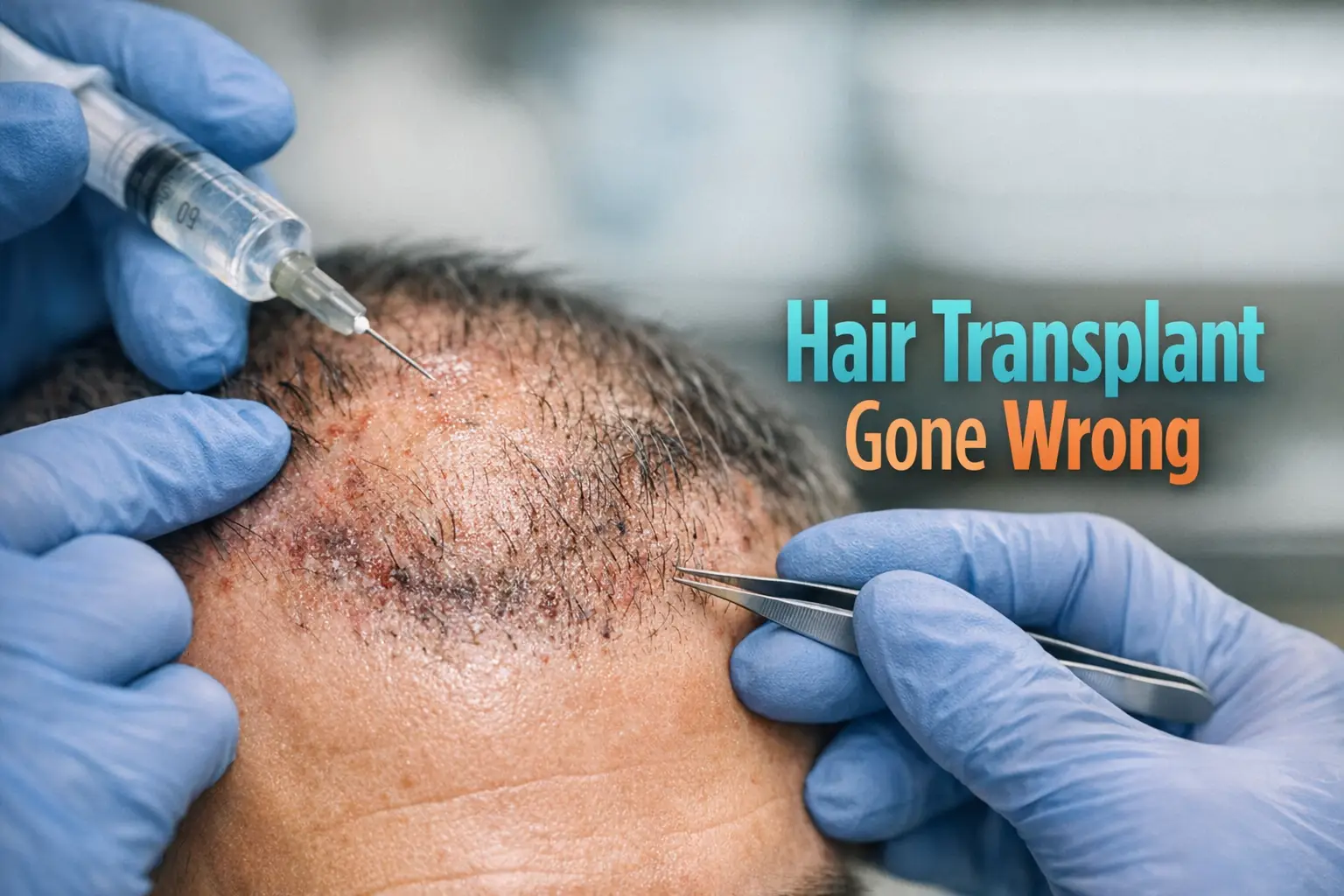
Hair Transplant Gone Wrong cases can be emotionally and physically challenging, especially when the results look unnatural or complications begin to appear during recovery.
While modern hair restoration techniques are generally safe, unsuccessful procedures still happen due to poor planning, inexperienced clinics, overharvesting, infection, or unrealistic hairline design.
Recognizing the warning signs early is essential for minimizing damage and exploring effective repair options. Based on clinical experience, this article explains the common causes of failed hair transplants, possible complications, recovery timelines, corrective treatments, and what patients should know before considering a repair procedure.
Signs Your Hair Transplant May Have Failed
One of the clearest signs that a hair transplant has not succeeded is a lack of hair growth where new follicles were implanted. After the initial shedding phase, patients expect to see new hair emerging, but if the area remains sparse or patchy, it often means the grafts didn’t survive. An unnatural hairline is another red flag—this might show up as uneven density or hair growing in odd directions, which can be difficult to disguise.
Scarring that is raised or more extensive than normal healing—such as hypertrophic or keloid scars—also points to complications. Persistent discomfort like pain or itching beyond the usual recovery timeframe, or signs of infection such as redness and pus, require prompt medical attention. Though rare, scalp necrosis, where tissue dies due to poor blood supply, is a serious complication demanding urgent care.
In practice, many patients confuse normal post-operative symptoms with transplant failure. Monitoring the site over several weeks and taking photos helps distinguish between typical healing and problems. Shock loss, where existing hairs around the transplant shed temporarily, is common and usually reversible. But if symptoms persist or worsen, it often reflects a problematic outcome that needs addressing.
Visual signs like patchy growth and unnatural hairlines tend to cause the most distress among patients.
Common Risks and Complications to Watch For
Failures often trace back to technical errors or patient-related factors. Overharvesting donor hair can leave the donor area thin and scarred, reducing options for future procedures. Poor graft placement—such as incorrect angles or overcrowding—can result in unnatural hair direction and compromised follicle survival. While infections are uncommon when sterile techniques are followed, they can cause lasting damage if they occur and go untreated.
Allergic reactions to anesthesia or medications are another possible hurdle, sometimes presenting as swelling or rashes that complicate recovery. Shock loss of surrounding hairs is a recognized risk but usually temporary. Unrealistic expectations about timing and density often contribute to dissatisfaction; hair growth is gradual and can take months before noticeable improvement.
Less frequent complications include cysts, numbness, and folliculitis. These typically resolve with treatment but can extend recovery time. Careful patient selection, precise surgical technique, and thorough preoperative counseling are key to minimizing these risks.
Educating patients about what to expect helps prevent frustration and disappointment after the procedure.
How to Manage Recovery After a Poor Outcome
When a transplant doesn’t go well, addressing treatable issues like infection or inflammation is the first step. Antibiotics or anti-inflammatory medications can improve healing and reduce the chance of permanent damage. Non-surgical treatments such as platelet-rich plasma (PRP) and mesotherapy may support scalp health and encourage remaining hair follicles to become more active, especially in areas with patchy growth or scarring.
PRP involves concentrating platelets from the patient’s own blood to stimulate tissue repair, while mesotherapy delivers vitamins and nutrients directly to the scalp. Dermaroller microneedling is another option that can boost blood flow and promote healing. Patience is important here—hair follicles operate on growth cycles that can take six to twelve months before visible improvements appear.
If cosmetic concerns persist or scarring is pronounced, surgical revisions might be necessary. These can include scar excision, redistributing grafts, or additional follicular unit extraction procedures. Emotional support also plays a role; counseling or support groups can help patients deal with the psychological impact of unsatisfactory results.
Maintaining good scalp hygiene and protecting the scalp from sun exposure during recovery supports better outcomes and lowers the risk of further complications.
While non-surgical therapies can enhance scalp conditions, they often fall short of fully correcting severe transplant failures.
Cost Implications of Corrective Procedures
The expense of fixing a hair transplant that has gone wrong varies widely, depending on the approach and extent of repair needed. Non-surgical treatments like PRP and mesotherapy tend to cost less per session but require multiple visits, each potentially running into several hundred dollars. Surgical corrections are more expensive, sometimes reaching into the thousands or tens of thousands, influenced by the complexity of the procedure and geographic location.
Cosmetic corrective procedures are rarely covered by insurance, so patients usually pay out-of-pocket. It’s wise to seek multiple consultations and cost estimates to weigh options carefully. Sometimes, opting for less expensive treatments initially may lead to additional interventions later, while investing upfront in experienced surgeons can reduce the chance of repeat surgeries.
Indirect costs—such as taking time off work, travel expenses, and purchasing post-treatment care products—should also factor into planning.
Clear communication about all potential expenses helps patients avoid unexpected financial strain.
Comparing Repair Options for Botched Transplants
Repair strategies depend on the specific issues and patient preferences. PRP therapy is often chosen for mild thinning or poor follicle stimulation; it’s non-invasive and involves little downtime but requires multiple sessions and offers variable, sometimes temporary, benefits. Mesotherapy can improve scalp nourishment and minor hair growth but similarly needs ongoing treatments.
Surgical revision is the go-to for significant scarring, unnatural hairlines, or patchiness. It can provide permanent correction but comes with increased costs and longer recovery periods. Scalp micropigmentation offers a way to camouflage scars and create the illusion of density without encouraging new hair growth. For extensive failures or when surgery isn’t an option, hair systems or wigs provide immediate coverage, though they require maintenance and aren’t permanent solutions.
Often, combining treatments—such as PRP alongside surgical revision—produces the most satisfactory outcomes. Timing matters; most repairs are best performed after the scalp has fully healed, usually nine to twelve months after the initial transplant.
Choosing the right approach involves clinical evaluation and setting realistic expectations.
| Repair Option | Best For | Pros | Cons |
|---|---|---|---|
| PRP Therapy | Mild thinning, poor follicle stimulation | Non-invasive, promotes healing, minimal downtime, uses patient’s own blood | Multiple sessions needed, variable results, benefits may be temporary |
| Mesotherapy | Scalp nourishment, minor growth improvement | Stimulates blood flow, minimal downtime, can be combined with other treatments | Temporary effects, requires maintenance, risk of minor discomfort or bruising |
| Surgical Revision | Severe scarring, unnatural hairline, significant patchiness | Can restore natural look, permanent correction, addresses structural issues | Higher cost, longer recovery, risk of further scarring or complications |
| Scalp Micropigmentation | Camouflage scars, add density illusion | Immediate visual improvement, non-surgical, enhances appearance without hair growth | Doesn’t promote hair growth, tattooing risks, color may fade over time |
| Hair Systems/Wigs | Extensive failure, temporary solution, or when surgery is not an option | Non-surgical, immediate coverage, customizable styles | Maintenance required, not permanent, potential discomfort or stigma |
Frequently Asked Questions
What are the common signs that a hair transplant has failed?
Poor hair growth, unnatural hairline, excessive scarring, persistent pain, and signs of infection such as redness or pus are common indicators of a failed transplant. Other symptoms include patchy appearance, prolonged redness, or scalp necrosis.
Can a hair transplant gone wrong be fixed?
Yes, depending on the issue, options range from non-surgical treatments like PRP to surgical revisions. Early assessment helps determine the best approach. Some cases may require a combination of therapies for optimal results.
How long should I wait before deciding my transplant failed?
Hair growth typically takes 6 to 12 months to show visible results. If problems persist beyond this period, it is reasonable to seek further evaluation. Patience is important as hair follicles cycle through growth phases at different rates.
Are corrective procedures for failed transplants expensive?
Costs vary widely based on treatment type and clinic. Non-surgical options are generally more affordable but may require ongoing sessions, while surgical repairs have higher upfront costs. Insurance usually does not cover cosmetic corrections.
What causes a hair transplant to go wrong?
Poor surgical technique, improper patient selection, infection, excessive harvesting, and unrealistic expectations are common causes of failed transplants. Other factors include inadequate post-op care and underlying medical conditions.
Is infection common after hair transplant surgery?
Infections are rare with proper sterile technique and care but can occur. Prompt treatment is essential to prevent lasting damage. Following post-op instructions significantly reduces infection risk.
Can non-surgical treatments improve a bad hair transplant?
Yes, treatments like PRP and mesotherapy can stimulate scalp health and improve hair growth in mild to moderate cases. They are less effective for severe scarring or extensive follicle loss.
How do I choose the right clinic for corrective procedures?
Look for clinics with experienced hair restoration specialists who have a proven track record managing complications. Reviews, before-and-after photos, and consultations help assess expertise and suitability.
What psychological support is available for those unhappy with results?
Counseling, support groups, and mental health professionals can assist patients coping with disappointment or body image concerns related to hair transplant outcomes.
Quick Answers
- Poor hair growth and unnatural hairlines are key signs of a hair transplant gone wrong.
- Non-surgical options like PRP can aid recovery but may not fully fix severe failures.
- Surgical revisions offer permanent correction but involve higher costs and longer recovery.
- Patience is essential, as hair growth results take 6 to 12 months to become apparent.
- Choosing an experienced specialist and managing expectations reduces the risk of complications.
References
- Shapiro J, et al. “Hair transplantation: Surgical techniques and complications.” Dermatol Clin. 2013;31(1):15-23. PMID: 23298713
- Jimenez F, Ruifernández M. “Hair transplant complications and their management.” Dermatol Surg. 2015;41(6):693-700. DOI: 10.1097/DSS.0000000000000327
- Rassman WR, et al. “Follicular unit extraction: Minimally invasive surgery for hair transplantation.” Dermatol Surg. 2002;28(8):720-728.
- Bernstein RM, Rassman WR. “The aesthetics of hair transplantation.” Dermatol Clin. 1997;15(2):277-293.
- Umar S. “Platelet-rich plasma in hair restoration.” J Cutan Aesthet Surg. 2014;7(4):239-243.
- Kim BJ, et al. “Complications of hair transplantation.” J Korean Med Sci. 2017;32(9):1403-1409.