
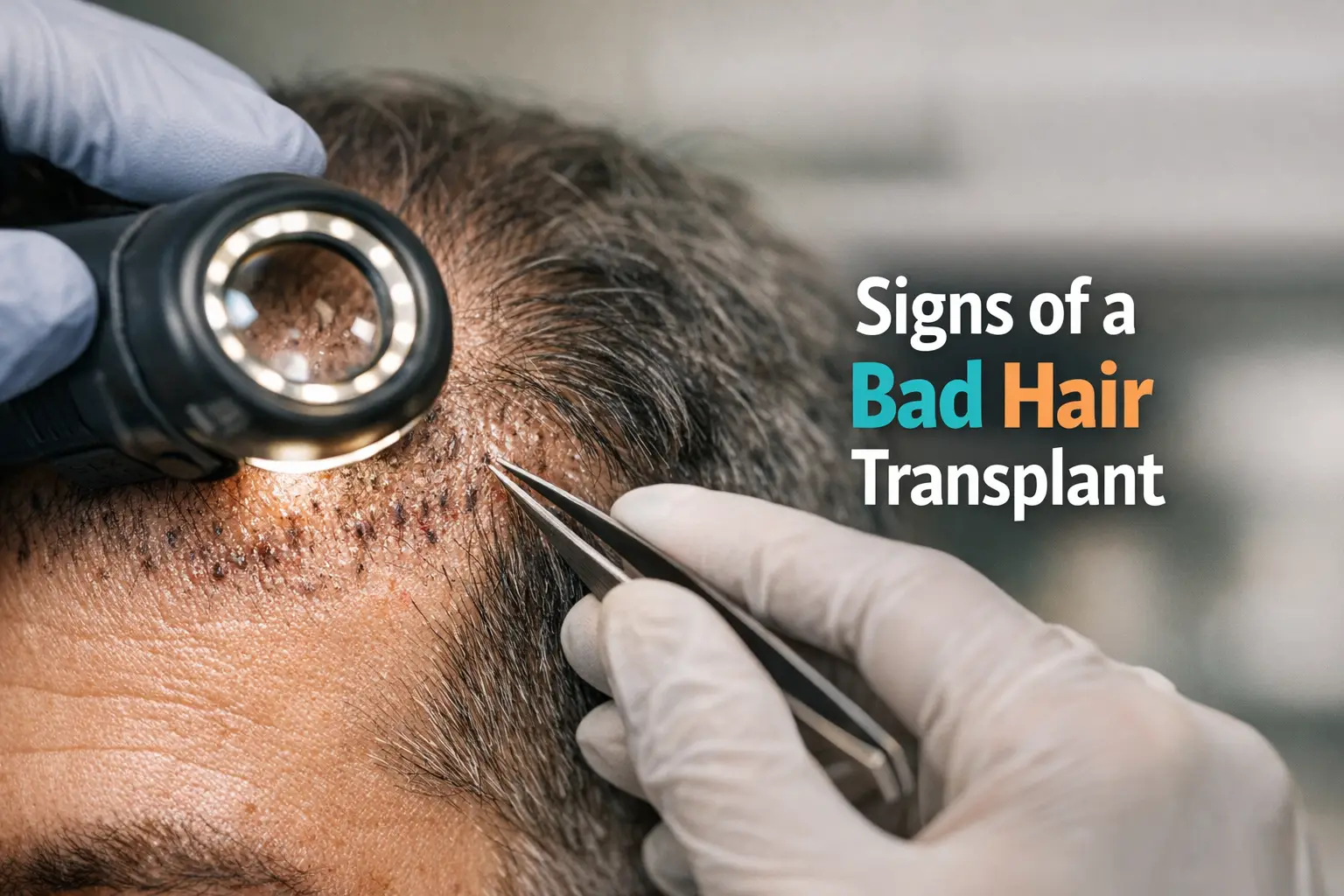
A hair transplant should create natural-looking hair growth that blends with existing hair and improves overall appearance. While many procedures achieve successful outcomes, some patients experience disappointing results due to poor planning, surgical errors, or complications during healing.
Recognizing the signs of a bad hair transplant can help patients seek professional advice and explore corrective options when necessary. These warning signs are often seen in a hair transplant gone wrong, especially when graft survival, hairline design, or donor area management has been compromised.
It is important to understand that hair transplants require time to mature. Temporary shedding, redness, and uneven early growth are often normal parts of the recovery process. However, certain warning signs may indicate that the final result could be compromised.
What Are the Signs of a Bad Hair Transplant?
A poor hair transplant result is not always obvious immediately after surgery. In many cases, concerns become more noticeable as the transplanted hair begins to grow and the scalp fully heals.
Poor Hair Growth
One of the most common signs is limited or uneven hair growth in the transplanted area. While temporary shedding is expected during the first few weeks, most patients should begin seeing new growth after several months.
If large areas remain thin or empty long after the expected growth period, graft survival may have been compromised.
Patchy Density
Patchy growth occurs when some grafts grow successfully while others fail. This can create an uneven appearance and reduce overall coverage.
When patchy growth remains visible after the normal maturation period, it may be related to poor graft survival or uneven implantation. You can read more about low density hair transplant results.
Unnatural Hairline Design
A natural hairline typically contains soft irregularities and gradual density transitions. Hairlines that are too straight, too low, or excessively dense can appear artificial and draw unwanted attention.
Hairline design has a major effect on whether a result looks natural or visibly operated. Learn more about unnatural hairlines after hair transplant.
Hair Growing in the Wrong Direction
Transplanted hair should follow natural growth patterns. Incorrect graft angulation can cause hairs to grow upright or in inconsistent directions, making styling difficult and affecting the overall appearance.
Visible Scarring
Some degree of scarring is expected after hair transplantation. However, thick, irregular, or highly visible scars may indicate surgical trauma, poor healing, or excessive donor area harvesting.
| Warning Sign | Possible Cause |
|---|---|
| Poor hair growth | Low graft survival |
| Patchy density | Uneven graft distribution |
| Unnatural hairline | Poor planning or design |
| Wrong hair direction | Incorrect graft angulation |
| Visible scars | Aggressive harvesting or healing complications |
Early Recovery Signs That Should Not Be Ignored
Not every unusual symptom means a transplant has failed. However, certain recovery issues may require additional evaluation.
Persistent Redness and Swelling
Mild redness and swelling are common immediately after surgery. If these symptoms persist for an extended period or worsen over time, further assessment may be necessary.
Infection
Infections are uncommon but can affect graft survival and healing. Signs may include increasing pain, pus, fever, or significant scalp tenderness.
Excessive Crusting
Small scabs are expected during the healing process. Thick crusting, unpleasant odor, or prolonged discharge may indicate complications.
Cysts or Bumps
Small cysts occasionally develop around healing follicles. Persistent or painful bumps should be evaluated to rule out folliculitis or infection.
What Causes a Bad Hair Transplant?
Several factors can contribute to unsatisfactory results. In many cases, problems develop because of poor surgical planning rather than the transplantation technique itself.
Poor Candidate Selection
Not everyone is an ideal candidate for hair transplantation. Patients with limited donor reserves, unstable hair loss, or certain scalp conditions may require alternative treatment strategies.
Overharvesting the Donor Area
Removing too many grafts from the donor area can create visible thinning, scarring, and limited options for future procedures.
Donor area damage can be difficult to correct if grafts are extracted too aggressively. You can review our detailed guide on overharvested donor areas after hair transplant.
Incorrect Hairline Design
A poorly designed hairline may not suit the patient’s facial features, age, or long-term hair loss pattern.
Inexperienced Surgical Technique
Successful transplantation requires careful graft handling, proper angulation, and strategic placement. Technical errors can affect both growth and appearance.
Unrealistic Expectations
Some dissatisfaction occurs when expectations do not align with what a transplant can realistically achieve. This highlights the importance of detailed preoperative planning and patient education.
How Uneven Growth and Unnatural Hairlines Affect Results
Uneven growth and poorly designed hairlines are among the most noticeable indicators of a poor transplant outcome. These issues can affect facial balance and make the procedure more obvious to others.
A successful hairline should appear age-appropriate, natural, and consistent with existing hair characteristics. When hairlines are placed too low, too straight, or too dense, the result may look artificial even if the grafts survive successfully.
| Aspect | Successful Hair Transplant | Bad Hair Transplant |
|---|---|---|
| Hair Growth | Consistent and natural | Patchy or limited growth |
| Hairline | Natural and age-appropriate | Harsh or artificial appearance |
| Scarring | Minimal and discreet | Visible or irregular scars |
| Recovery | Normal healing process | Prolonged complications |
Can a Bad Hair Transplant Be Fixed?
Many poor results can be improved through corrective procedures. The most appropriate solution depends on the specific issue and available donor resources.
Corrective planning may include hairline redesign, additional grafting, scar improvement, or camouflage techniques depending on the case. For a broader explanation, visit our guide on hair transplant repair options.
Hairline Revision
Hairline revision can soften unnatural designs and create more realistic transitions using carefully placed grafts.
Additional Grafting
Patients with poor density may benefit from additional graft placement if sufficient donor hair remains available.
Scalp Micropigmentation
SMP may help camouflage scars and improve the appearance of thinning areas.
Scar Revision Procedures
Selected patients may benefit from surgical scar revision or other corrective techniques depending on the type and location of scarring.
Who Is a Suitable Candidate for Corrective Treatment?
Patients with visible cosmetic concerns after a previous transplant may be candidates for corrective procedures if adequate donor resources remain available.
- Patients with unnatural hairlines
- Individuals with poor density
- People with visible scarring
- Patients with incorrect hair direction
- Individuals seeking refinement of previous work
Who May Not Be a Suitable Candidate?
Some patients may require additional evaluation before considering corrective treatment.
- Patients within the first 12 months after surgery
- Individuals with unrealistic expectations
- Patients with active scalp disorders
- People with severely limited donor reserves
What Factors Influence Correction Costs?
The cost of correcting a bad hair transplant depends on the extent of the problem, available donor hair, technique selection, and whether additional treatments are required.
Corrective procedures in Turkey are often more affordable than in many European countries and the United States. These differences are generally related to healthcare infrastructure, operational costs, and regional economic factors.
The final cost depends on individual factors such as:
- Extent of correction required
- Number of grafts needed
- Hairline revision complexity
- Scarring severity
- Additional supportive treatments
Clinical Experience
In our clinical experience, the most common signs of a poor transplant are not always related to hair growth itself. Hairline design, graft direction, and donor area management frequently have a greater impact on long-term satisfaction than graft numbers alone.
Medical Review
This article has been medically reviewed for accuracy and reflects current principles used in modern hair transplantation and revision procedures. Treatment recommendations should always be based on an individual assessment of donor availability, scalp condition, and long-term restoration goals.
Frequently Asked Questions
How can I tell if my hair transplant failed?
Persistent patchy growth, visible gaps, unnatural hair direction, and poor density long after the expected growth period may indicate problems with the result.
Is uneven growth always a sign of failure?
No. Uneven growth can occur during the early stages of healing. A final assessment is usually more accurate after 12 months.
Can an unnatural hairline be corrected?
Many unnatural hairlines can be improved through hairline revision procedures and strategic graft placement.
How long should redness last after a hair transplant?
Mild redness is common initially, but persistent or worsening redness should be evaluated by a qualified professional.
Can a bad hair transplant be repaired?
Many poor outcomes can be improved, although the available options depend on donor resources and the nature of the problem.
Additional FAQs
Can infections damage transplanted grafts?
Yes. Severe infections may affect graft survival and should be treated promptly.
Is visible scarring normal?
Small scars are expected, but prominent or irregular scarring may indicate complications or aggressive harvesting.
Should I seek a second opinion if I am unhappy with my result?
If concerns persist after the expected recovery period, an independent assessment may help clarify available options.
Scientific References
View Scientific References
Complications of Hair Transplant Surgery: A Review
Shin H, Kim Y, et al. Dermatologic Surgery. PMID: 32079854. DOI: 10.1097/DSS.0000000000002374.
Hair Transplantation: Advances and Complications
Jimenez F, Ruifernandez JM. Facial Plastic Surgery Clinics of North America. PMID: 29610081. DOI: 10.1016/j.fsc.2017.12.004.
Follicular Unit Transplantation
Bernstein RM, Rassman WR. Dermatologic Surgery. PMID: 15937881.
Follicular Unit Extraction: Minimally Invasive Surgery for Hair Transplantation
Rassman WR, et al. DOI: 10.1046/j.1524-4725.2002.01144.x.