
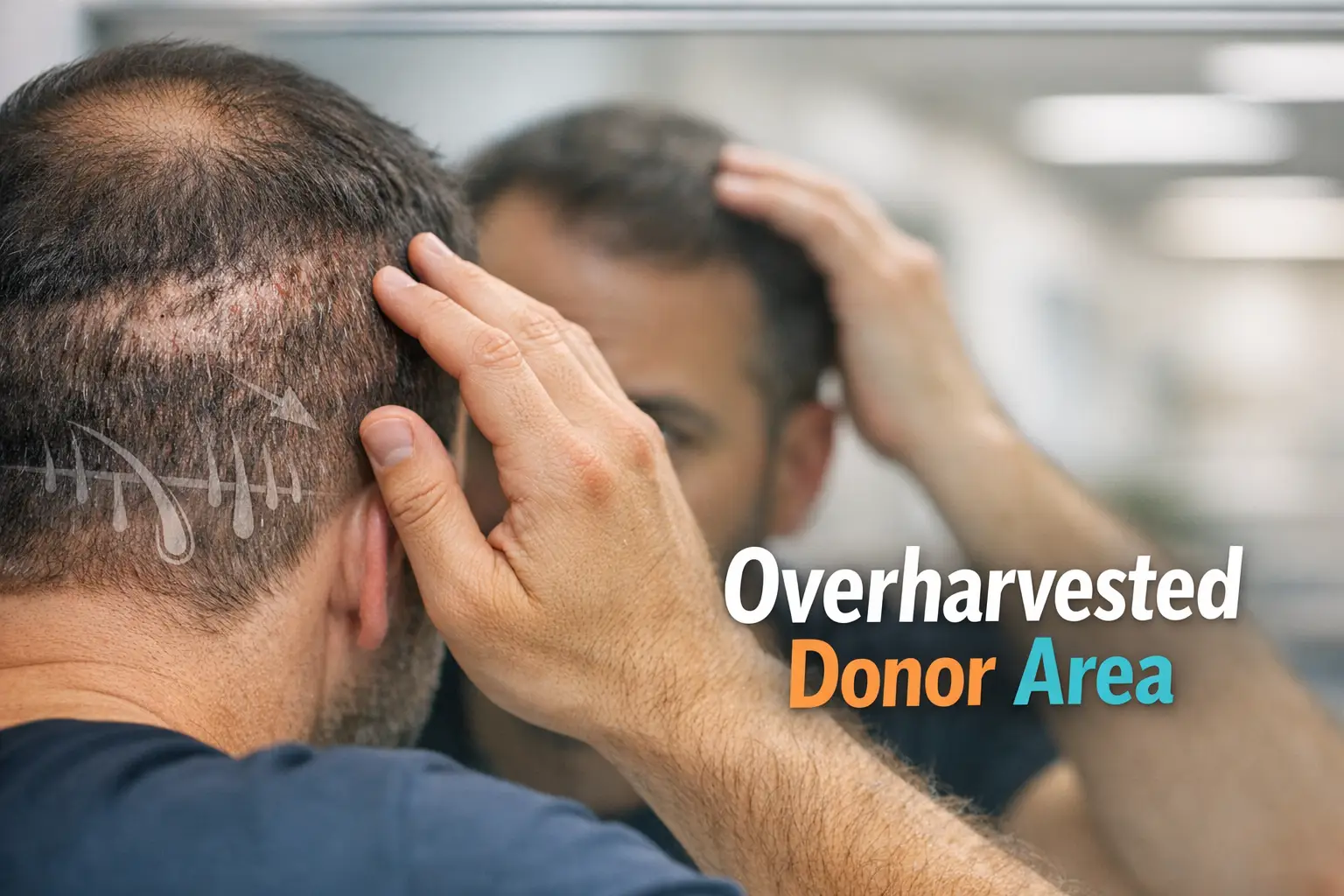
While modern hair transplant techniques can achieve natural-looking results, excessive extraction can compromise both the appearance of the donor area and future treatment options. Overharvesting is one of the most serious problems seen in a hair transplant gone wrong, especially when donor planning is not handled carefully.
Understanding the signs of overharvesting and the available management strategies can help patients make informed decisions before and after surgery.
What Is an Overharvested Donor Area?
The donor area is typically located at the back and sides of the scalp where hair follicles are genetically more resistant to hair loss. During a hair transplant, these follicles are harvested and transplanted into thinning or bald areas.
When too many grafts are removed from a limited donor zone, the remaining hair may no longer provide adequate coverage. This can create visible gaps, reduced density, and an unnatural appearance, particularly when the hair is cut short.
Why Does Overharvesting Happen?
Overharvesting can occur for several reasons. In some cases, clinics attempt to extract an excessively high number of grafts in a single session. In others, poor planning, uneven extraction patterns, or inadequate assessment of donor density may contribute to the problem.
Planning mistakes can affect more than the donor area. The same lack of long-term design strategy may also lead to an unnatural hairline after hair transplant.
- Excessive graft extraction in one session
- Poor donor area assessment
- Uneven harvesting patterns
- Aggressive FUE procedures
- Limited donor reserves
- Repeated transplant sessions without adequate planning
Signs of an Overharvested Donor Area
Many patients notice changes in the donor area weeks or months after surgery. While temporary redness and mild thinning may be part of normal healing, persistent changes can indicate excessive follicle extraction.
Because donor thinning can be one of several warning signs after surgery, patients may also benefit from reviewing the broader signs of a bad hair transplant.
Patchy or Moth-Eaten Appearance
One of the most common signs is irregular thinning throughout the donor area. Instead of appearing uniformly dense, the scalp may show visible gaps between remaining hairs.
Visible Scarring
Small white dots from FUE extraction are normal to some degree. However, when harvesting is excessive, these scars may become more noticeable and create cosmetic concerns.
Persistent Redness or Sensitivity
Most post-operative redness gradually improves. If redness, itching, tenderness, or discomfort continues for an extended period, additional evaluation may be recommended.
Reduced Hair Density
The donor area may look noticeably thinner than before surgery, especially under bright lighting or when the hair is cut very short.
When reduced density is visible in the transplanted area as well, the concern may involve both donor depletion and poor recipient coverage. You can read more about low density hair transplant results.
| Sign | What It May Indicate |
|---|---|
| Patchy thinning | Excessive follicle extraction |
| Visible white dots | FUE scarring |
| Persistent redness | Prolonged healing response |
| Uneven density | Poor extraction distribution |
| Visible scalp | Reduced donor coverage |
What Are the Long-Term Effects of Overharvesting?
Because transplanted follicles do not regenerate in the donor area, excessive extraction may have long-term consequences. These effects vary depending on the severity of the harvesting and the patient’s original donor density.
Permanent Donor Depletion
Removing too many grafts permanently reduces the available donor supply. This may limit future transplant options if additional hair restoration becomes necessary.
Visible Cosmetic Changes
Donor thinning can remain visible even after the recipient area heals. This is often more noticeable when wearing short hairstyles.
Scalp Tissue Changes
In some cases, excessive extraction may affect scalp elasticity, healing characteristics, and overall tissue quality.
Psychological Impact
Visible donor damage may affect confidence and overall satisfaction with the hair transplant outcome. For some patients, donor area concerns become more troubling than the original hair loss.
Can an Overharvested Donor Area Recover?
Hair follicles removed during transplantation do not grow back. As a result, complete restoration of the original donor density is generally not possible. However, various treatments may improve the appearance of the donor area and help camouflage visible thinning.
The goal of treatment is usually to optimize the appearance of the remaining hair rather than replace every lost follicle.
Treatment Options for an Overharvested Donor Area
Several treatment approaches may be considered depending on the severity of donor depletion, available donor reserves, and the patient’s goals.
When donor depletion is part of a broader unsuccessful result, corrective planning may require a more comprehensive approach. You can review our detailed guide on hair transplant repair options.
Scalp Micropigmentation (SMP)
SMP uses specialized pigments to reduce scalp visibility and create the illusion of greater density. It is commonly used to camouflage FUE scars and patchy donor areas.
PRP Therapy
Platelet-rich plasma may help improve scalp health and support existing hair. While PRP cannot restore removed follicles, it may enhance the quality of remaining hair.
Low-Level Laser Therapy (LLLT)
LLLT may stimulate existing follicles and improve hair quality in selected patients. Results vary and typically require ongoing treatment.
Body Hair Transplantation
In selected cases, body hair may be used to improve donor area appearance. However, body hair differs from scalp hair in texture, growth cycles, and overall predictability.
Scar Revision Procedures
Patients with significant scarring may benefit from scar revision techniques or scar camouflage methods designed to improve cosmetic appearance.
| Treatment | Primary Goal | Limitations |
|---|---|---|
| SMP | Camouflage thinning and scars | Does not restore hair |
| PRP | Support existing hair | Cannot replace lost follicles |
| LLLT | Improve hair quality | Variable results |
| Body Hair Transplant | Increase coverage | Limited donor compatibility |
Who Is a Suitable Candidate for Donor Area Restoration?
Patients who have visible donor thinning, noticeable scarring, or cosmetic concerns related to overharvesting may be suitable candidates for corrective treatment.
- Patients with visible donor depletion
- Individuals with FUE scarring
- People seeking SMP camouflage
- Patients with realistic expectations
- Individuals with adequate remaining donor resources
Who May Not Be a Suitable Candidate?
Not every patient will benefit from surgical correction. In some situations, conservative management or camouflage techniques may be more appropriate.
- Patients with severely depleted donor reserves
- Individuals with active scalp disorders
- Patients expecting complete restoration of original density
- People with untreated medical conditions affecting healing
What Factors Influence Treatment Costs?
The cost of treating an overharvested donor area depends on the severity of the problem, the chosen treatment approach, and the complexity of the correction.
Treatment costs in Turkey are generally lower than in many European countries and the United States. These differences are typically related to healthcare infrastructure, operational expenses, and regional economic factors rather than a single aspect of treatment quality.
The final cost depends on individual factors such as:
- Extent of donor depletion
- Need for SMP or surgical correction
- Number of treatment sessions
- Remaining donor availability
- Additional supportive therapies
Clinical Experience
In our clinical experience, donor area management is one of the most important aspects of long-term hair transplant planning. Patients often focus on the recipient area, but preserving donor density frequently has a significant impact on future treatment flexibility and overall satisfaction.
Medical Review
This article has been medically reviewed for accuracy and reflects current principles used in modern hair transplantation and donor area management. Treatment recommendations should always be based on an individual assessment of donor density, scalp condition, and long-term restoration goals.
Frequently Asked Questions
Can an overharvested donor area grow back?
No. Follicles removed during a hair transplant do not regenerate. Treatment focuses on improving appearance rather than replacing lost follicles.
How do I know if my donor area was overharvested?
Patchy thinning, visible scalp, noticeable scarring, and uneven donor density are among the most common signs.
Can SMP help an overharvested donor area?
Yes. SMP is one of the most commonly used treatments for camouflaging donor thinning and visible extraction scars.
Is overharvesting more common with FUE?
It can occur when FUE extraction is performed aggressively or without proper donor area planning. However, careful technique significantly reduces this risk.
Can another hair transplant fix donor depletion?
In selected cases, body hair transplantation or limited corrective procedures may be considered. Suitability depends on available donor resources.
Additional FAQs
Does donor area thinning get worse over time?
It may become more noticeable if ongoing hair loss affects surrounding native hair. Long-term planning is important.
Can PRP restore lost donor follicles?
No. PRP may support existing follicles but cannot regenerate follicles that have already been removed.
Should I avoid very high graft counts in one session?
A conservative approach is often beneficial because preserving donor density may provide better long-term outcomes and future treatment options.
Scientific References
View Scientific References
Follicular Unit Extraction: Minimally Invasive Surgery for Hair Transplantation
Rassman WR, Bernstein RM, et al. Dermatologic Surgery. DOI: 10.1046/j.1524-4725.2002.01144.x.
Follicular Unit Transplantation
Bernstein RM, Rassman WR. Dermatologic Surgery. PMID: 15937881.
Hair Restoration Surgery: Challenges and Solutions
Shapiro R, et al. Journal of the American Academy of Dermatology. DOI: 10.1016/j.jaad.2010.10.043.
Complications in Hair Transplantation and Their Management
Jimenez F, Ruifernandez JM. Clinics in Dermatology. DOI: 10.1016/j.clindermatol.2018.08.004.